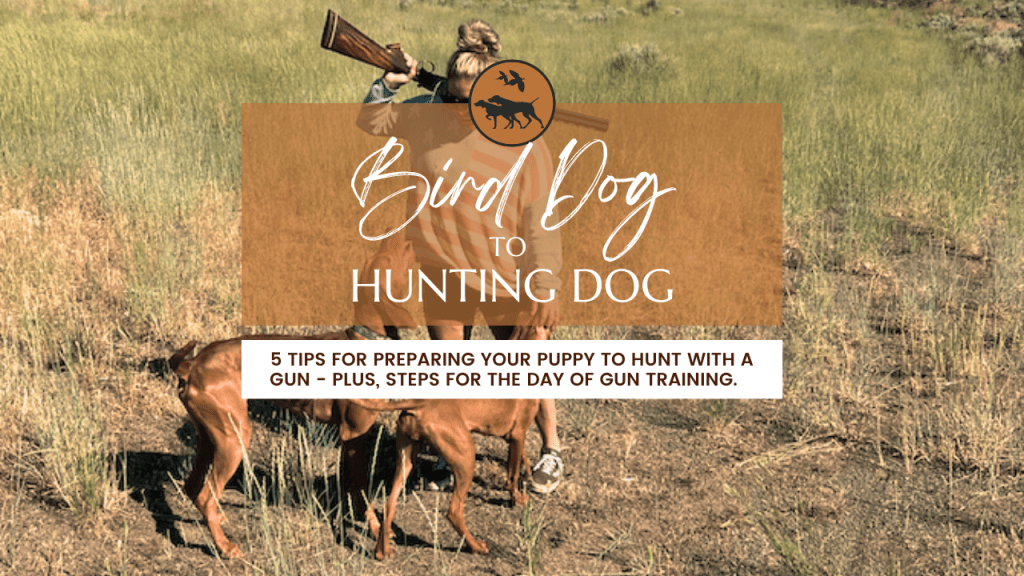
Whether you just purchased a floppy eared puppy to be your future hunting partner, or you don’t want to have a dog that is scared of fireworks or other loud bangs, then desensitizing your dog to loud noises a must.
However, it must be done slowly and strategically, or else you could be left with a scared and anxious dog. In the hunting world, we call these dogs Gun Shy. To non-hunters, it’s the dog that has be to put up in a room in the house with the TV blaring so they can’t hear the fireworks on the 4th of July. But, what most people do not realize is that a dog is not born Gun-Shy. It’s created.
Developing a plan to introduce your dog to guns (or loud noises) can be a challenge within itself, because of the amount of information available. The internet tells you to wait until a certain age before any type of loud noise is implemented into the dog’s life, while your uncle that’s had dog his whole life says “don’t listen to any of that crap and just take your dog out in the field and shoot the gun, it’ll be fine”. And we all know it won’t be fine. Which is why I’ve put together the most helpful tips that I have found while training puppies to be hunting dogs, including what to do when a gun blast is finally introduced to the dog.
Tip #1: Determine The End Goal
This one isn’t a tip for the dog, but rather you the handler. Determine what it is that you want your dog to feel comfortable doing. Is it bird hunting with shot guns, the slam of cattle guards out herding, or is the outcome to just not have a noise sensitive dog? Either way, before starting any training plan, know the end goal, or else you will never find your way there with the consistency that is needed when training a dog.
Tip #2: Bring out the Pots and Pans during Feeding Time
Feeding time is the perfect opportunity to start introducing soft bings and bangs. And since pots and pans are the source of all unintentional loud bangs in the kitchen, they make for great natural training aides. Before you run into your puppy’s feeding time banging on a pot like it’s the New Year, begin by lightly hitting the pot with a wooden spoon while standing at least five feet away. While you make the noise, you may notice that your dog stops eating for a second. If they continue to eat after a moment, you may continue the noise. If they stop eating all together, put away the pot and try again tomorrow. This first part will take patience, but as the days go on, you will be able to increase the noise level you make. The purpose behind this technique is to train your dog to associate something good – like food – with loud noises.
Tip #3: Utilize Background Noise
Ever notice how when you’re focused on something you don’t notice or hear life going on around you? Puppies go through the same experience. If they’re totally tuckered out, or out in the yard romping around, utilize consistent background noises to build disinterest in sounds around them. Not one time loud noises that will causes startling, but something that can create noise for a period of time. Like a speaker playing music, TV, your neighbors power tools, or even the vacuum.
At first, your pup may notice these sounds, especially when they first start-up, but if they were sleeping, simple pets and/or soft coos will more than likely put them right back to sleep, especially if they are under 3 months old. If you are out playing, get excited and put their attention back on you or their toy. By teaching them how to become disinterested in noises will also help you in training them how to ignore things on command. (Our go to is “Leave it”).
Pro-Tip: Have access to a construction site that would be safe for a dog? Or is there construction going on next to a park? Take them! Construction can be extremely loud, but if they are spending time with their favorite human and exploring new territory, they will immediately forget all about the loud noises.
Tip #4: Introduce Recorded Sounds
Whether it a shot-gun blast or a fire-work boom, these are the most common noises to make a dog shy. However, the first time they hear these sounds does not have to be in person where the noise level is overwhelming. Before actually introducing the puppy to the loud noise it will be around, start by playing the recorded sound of said subject. Obviously not at an ear piercing level. If the end goal is hunting, playing hunting shows on the TV with the same type of gun you will be shooting in the field, and the same prey type, will help familiarize your puppy with the sounds it will eventually be immersed in.
Tip #5: Introduce Gun shots between 5 and 6 months old.
Introducing a gun shot to your dog should happen between 5 and 6 months. If you wait too long, your risk of having a gun-shy dog goes up. Same if you start too early. On the day of the introduction, use the following steps to go from bird dog to gun dog:
Step 1: Determine which gun you want to train with. I always opt for a shot-gun since that is the gun used while bird hunting. If your dog is going to be hunting with different types of guns, feel free to bring them along if all goes as planned to shoot them after the initial introduction.
Step 2: Figure out what kind of play/toy excites your dog the most. You will want to take that toy to the place you will be shooting. If you’ve already introduced birds to your puppy and you have a frozen wing, this is the perfect distraction and training aide. Loud noise = birds.
Step 3: Have one person stay with the puppy to play, while the other person walks at least 100 yards away with the gun. When the puppy is playing, shoot the first shot. If the puppy does not show any signs of distress – ears pinned back, tail tucked – continue to step 3. If they do show signs, you will want to be done for the day and try again after working on more noise training.
Step 3: Walk forward 20 yards and shoot. If no distress, repeat until 20 yards away. If distress starts to happen, stop and try again a different day, starting again at 100 yards.
Step 4: At this point your puppy may have noticed you and what you are doing. If they haven’t already ran over, call them and let them smell the gun. The smell of gun-fire is distinct and it’s important to let the dog know where the scent belongs too.
Step 5: After allowing the puppy to smell the gun, the shoot can now engage with the puppy and the toy. After a minute of playing, try shooting the gun in close range. For example, play and then throw the toy. While the puppy is retrieving, shoot the gun. If your puppy has not shown any distress after this last shot, you now have a gun dog.
Just remember, patience is key and you will want to watch your dog closely for any sign of anxiety.
Bonus Tip: Already have a trusted hunting dog? Bring them along for this introduction! A puppy will feed off of the other dog’s energy, and when they do not show any sign of fear towards the gun, it will help ease the puppy’s fear as well.
 The Copper Dogs