Cinch, our 1.5-year-old female Vizsla, decided to give us another first in the form of a huge curveball for this outdoor-loving family—severe hives. From all the dogs myself or my husband have owned, we’ve never experienced a severe allergic reaction in our dogs. At least, not to the extent Cinch experienced over the 4th of July. Sure, we’ve had the occasional swelling from a bug bite, but Cinch really outdid herself.
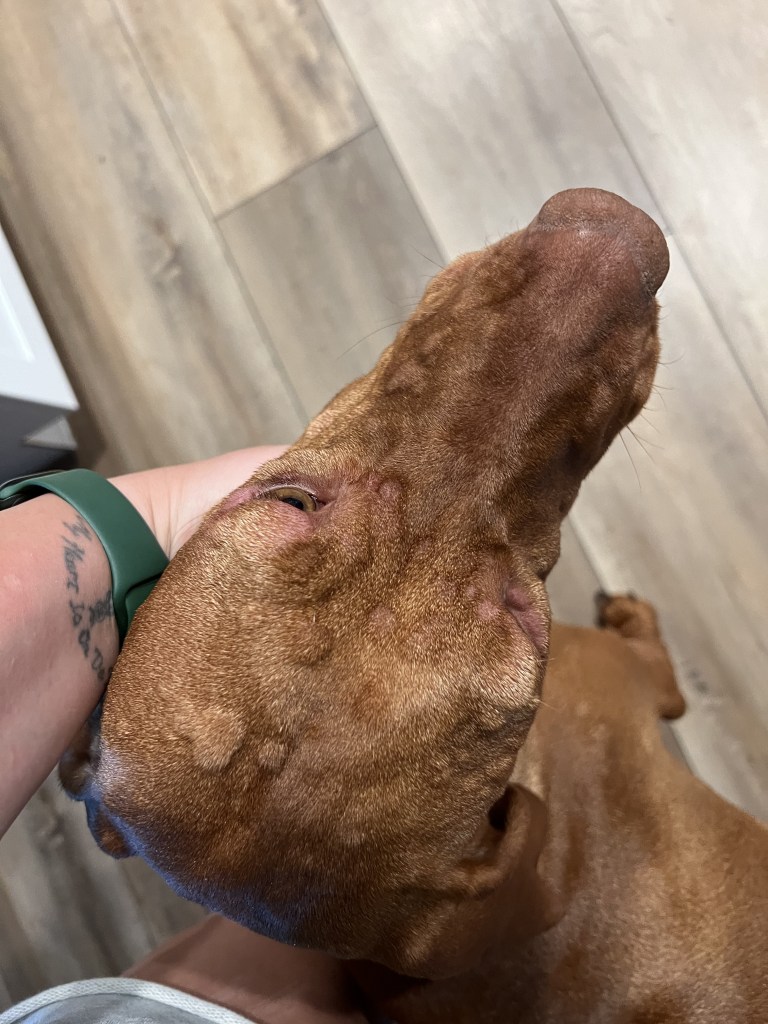
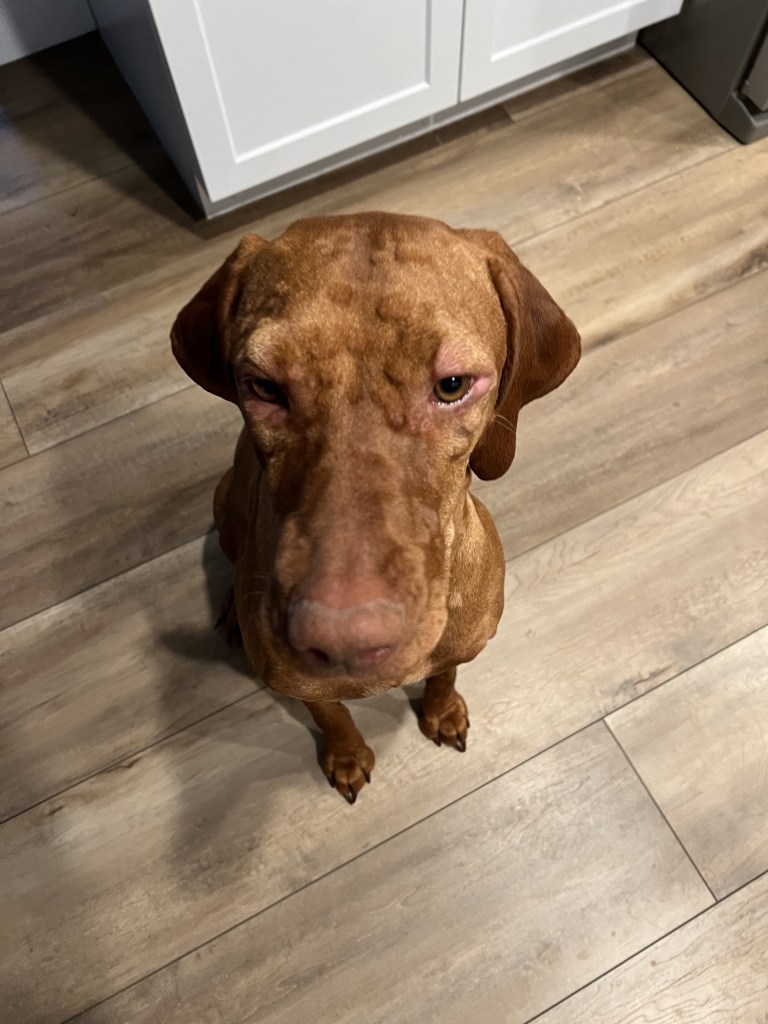
On the morning of the 4th of July, Cinch broke out in hives all over her little body. At first, it was only on her head, and then quickly it was all over, from snout to tail. As you can imagine, we were terrified that she was going to go into anaphylactic shock. To make matters worse, we were at the minimum two hours away from the nearest emergency vet open on Independence Day.
Tips for Managing Severe Allergic Reactions in Dogs
Now that we are on the other side and Cinch seems to be doing better (although any little bump or bug bite she gets I still monitor closely for an outbreak), I can give my tips to other dog owners that might go through a similar experience.
Tip 1: Add Benadryl to Your Doggy First Aid
Dogs can have 1 25mg pill for every 25 pounds of body weight. Although Cinch is 46 pounds, her vet cleared that she can take 2 pills for a total of 50mg. During allergic outbreaks, these can be given to the dog every 8-12 hours. We would give Cinch a dose in the morning, and then once again about an hour before bed.
Tip 2: Limit Outside Exposure
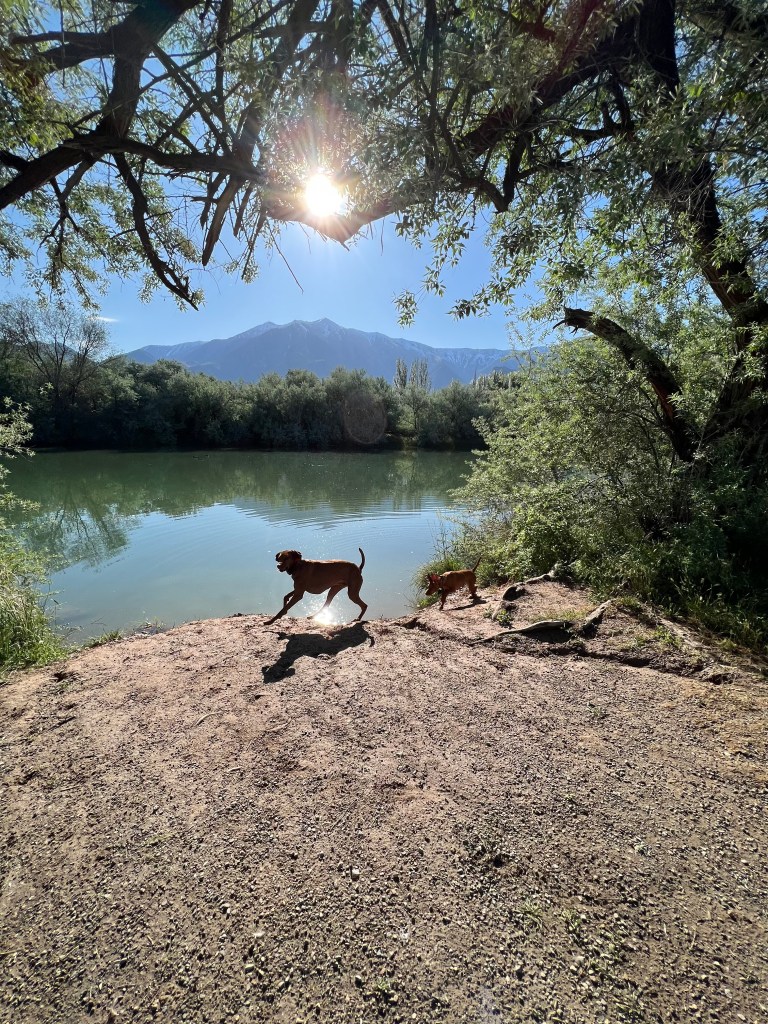
During an allergic outbreak, limit your dog’s time spent outdoors, especially if the cause of the hives is unknown. For three days, we only let Cinch outdoors to use the restroom. Trust me, this was hard for a little outdoorsy sun-bathing pup. She wanted so badly to run around in the trees or lay on the grass soaking up some sun.
Tip 3: Keep Them Calm
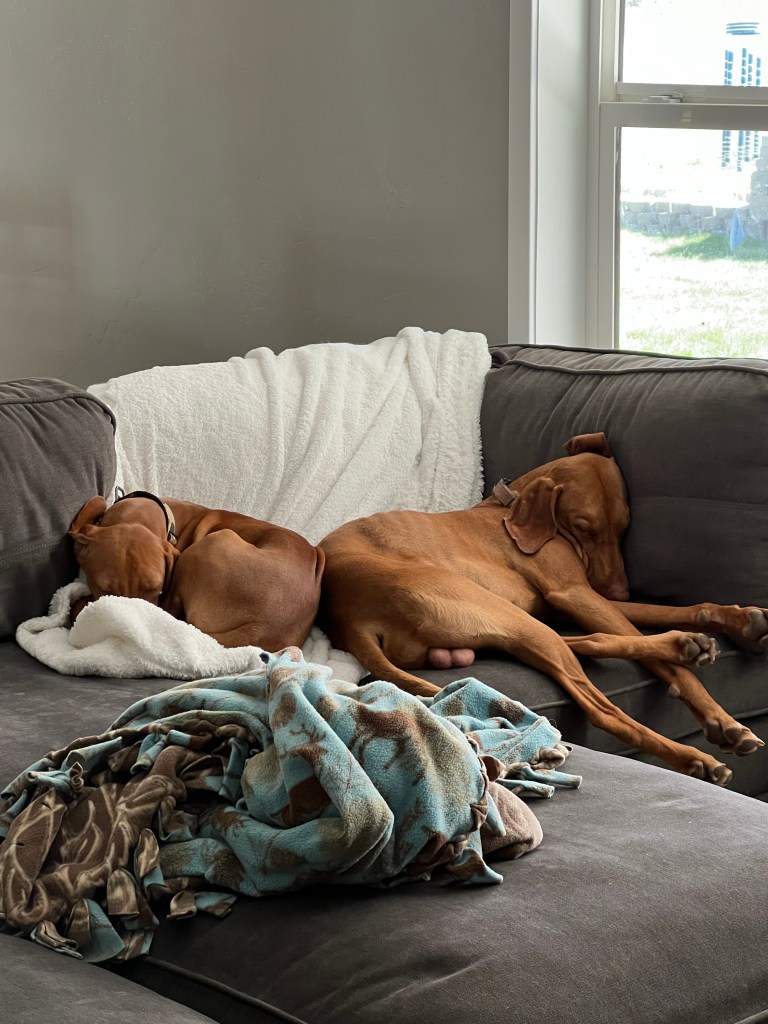
Any raised anxiety or blood pressure can worsen the hives. If your dog is like Cinch, that is easier said than done. However, since not too long ago we were in Spay Recovery Protocol, it was easy to bring that back. This meant a lot of cuddles and naps. If we weren’t busy, neither was she.
Tip 4: Call Your Vet
Even if Benadryl helps and makes the hives go away, you should take your pal in and have them checked out. The vet will look for bug bites, stings, or any indication that could be the reason for the reaction. They will also want to listen to their heart and internal organs, since any severe allergic reaction can be hard on their body. From that follow-up, they will determine if treatment is needed in addition to Benadryl.
Tip 5: Know That This Is Normal and Usually a One-Time Thing
Most dogs, unless their severe reaction is a known allergy like bees or wasps, will not have a severe allergic outbreak again. You know your dog best, and if they just aren’t back to their normal self, never hesitate to ring the vet, even if it’s just to get reassurance from them.
The Ordeal and Treatment
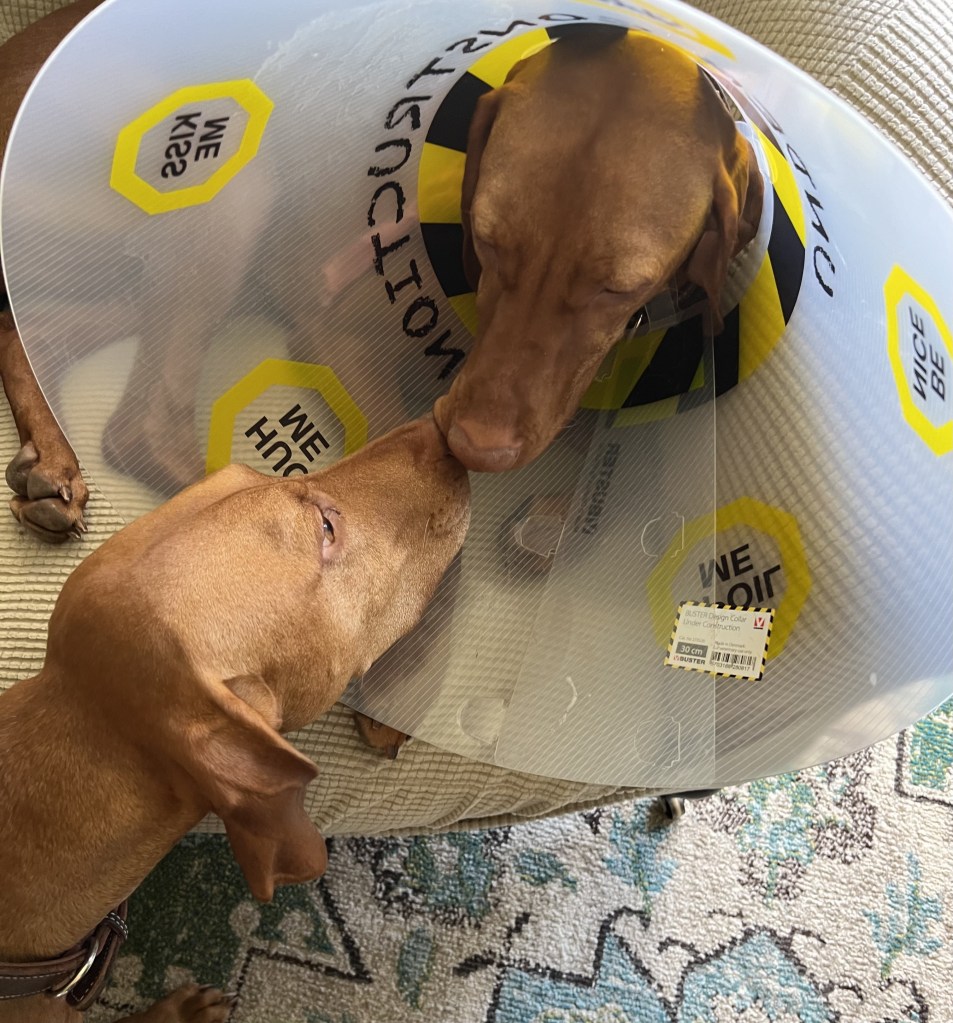
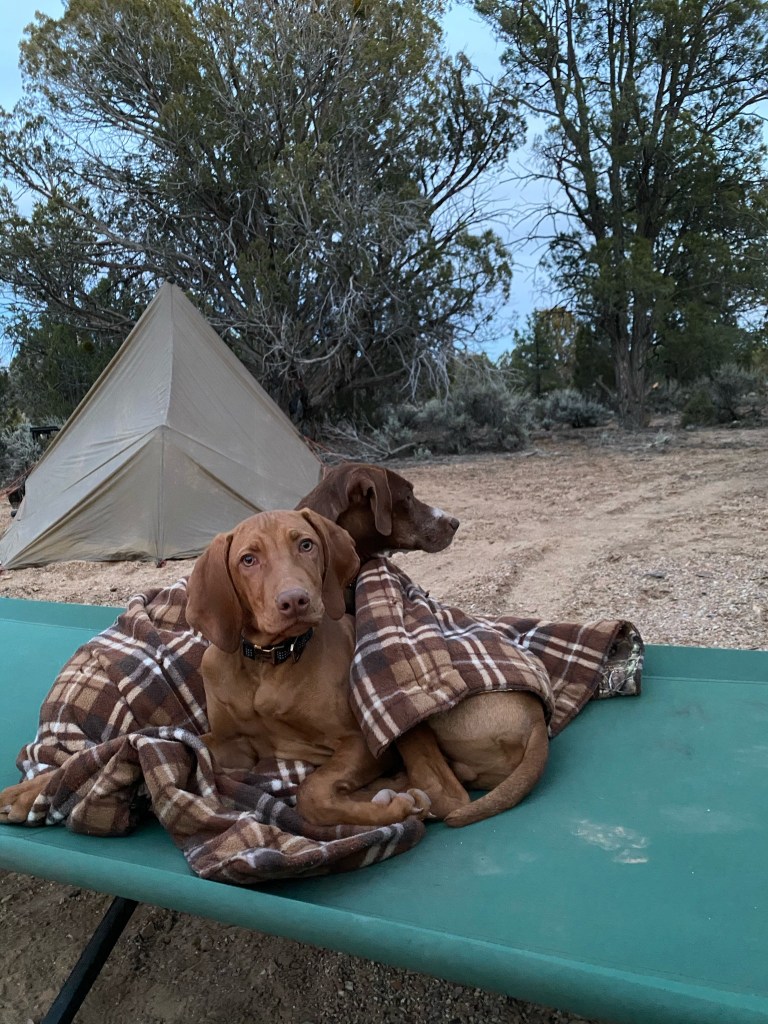
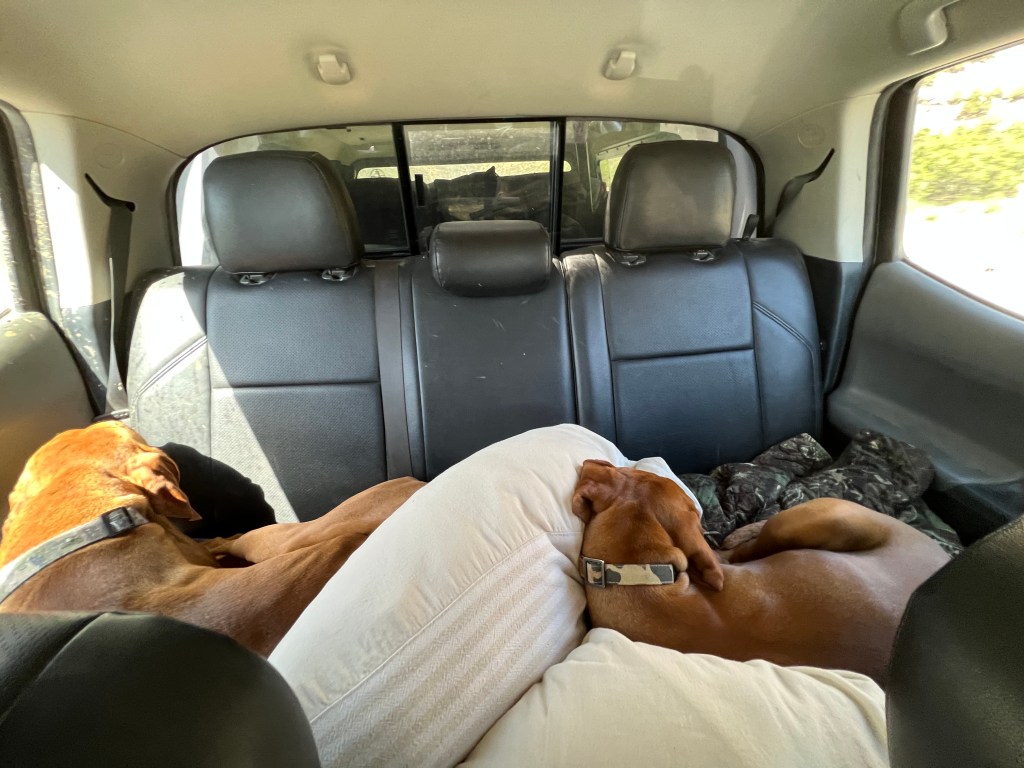
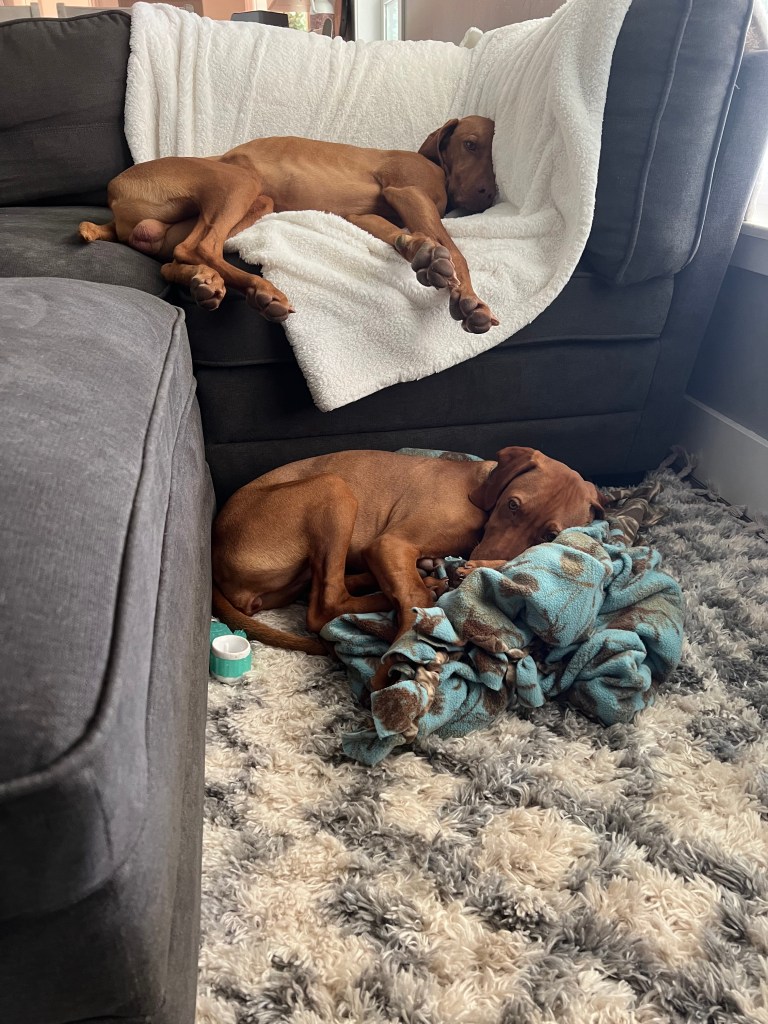
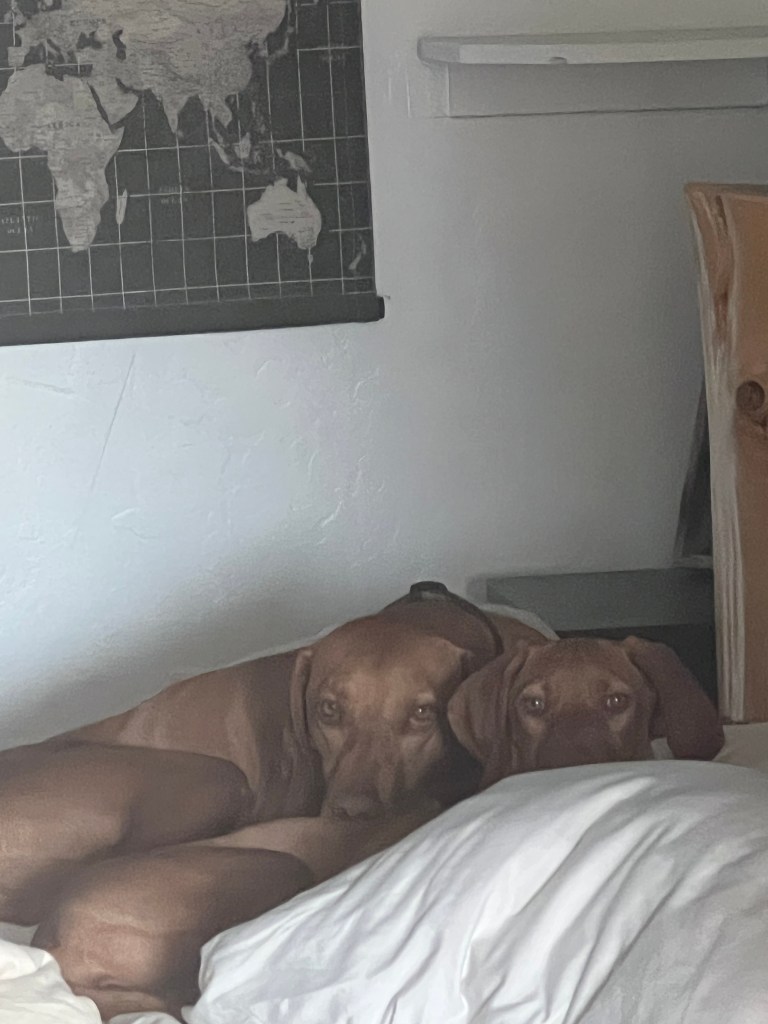
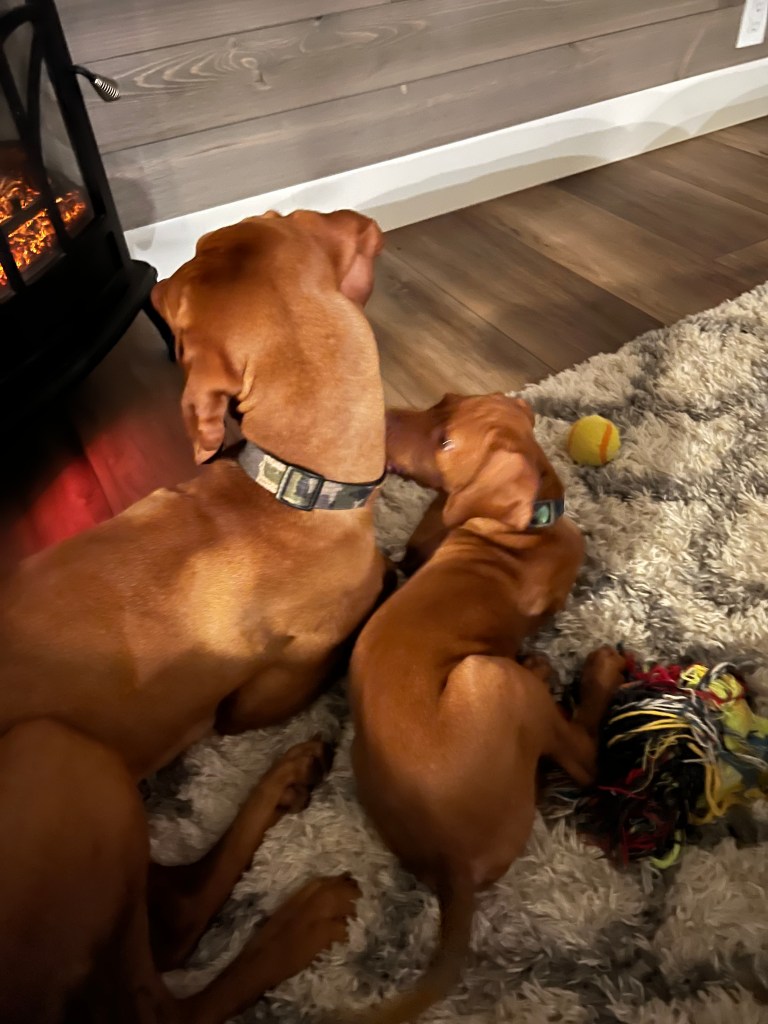
After a mad dash down a canyon from where we live and across three counties, we made it to the emergency vet. Let me tell you, that entire drive was nerve-racking. I was constantly listening to Cinch’s breathing and monitoring the progression of hives. She was not in a good state. Even Roper, our other dog, was nervous and wrapped himself around her like he could protect her. (If you know Roper, you know that him cuddling is HUGE.)
Luckily, we made it to the vet without any anaphylactic shock occurring. Once at the vet, they took her immediately back—sorry to everyone that had been waiting over an hour to be seen—due to the state she was in. The vet on staff administered a strong dose of an antihistamine and gave Cinch a steroid injection. Both stabilized her and allowed the hives to go down. Once we were discharged, we were on orders to continue with Benadryl and follow up with our primary vet on Monday after the holiday.
The follow-up appointment was a complete check-up to make sure that they couldn’t find anything that would have made Cinch have a reaction. Since all checked out and the reaction cause was unknown, the vet sent us home with a 7-day prescription of Prednisone, which is a steroid. At the appointment, I expressed my concern that we spend a lot of time outdoors and in far-out places and wasn’t sure what would happen if she had an outbreak when we were away from civilization. Since I expressed my concerns, the vet gave us extra Prednisone on the off chance she had a reaction out in the backcountry, which would give us enough time to get back into a town with a vet.
I want to advocate for all of us pet owners and reassure ourselves to speak up to our vets about our pets since we know them best. No matter the question or concern, the vet will not think less of you; in fact, they will think of you as a good animal owner.
This experience was definitely scary, but all that matters is Cinch is back to her playful and hive-free self. As always, with any medical concern for your pet, never hesitate to reach out to your vet!
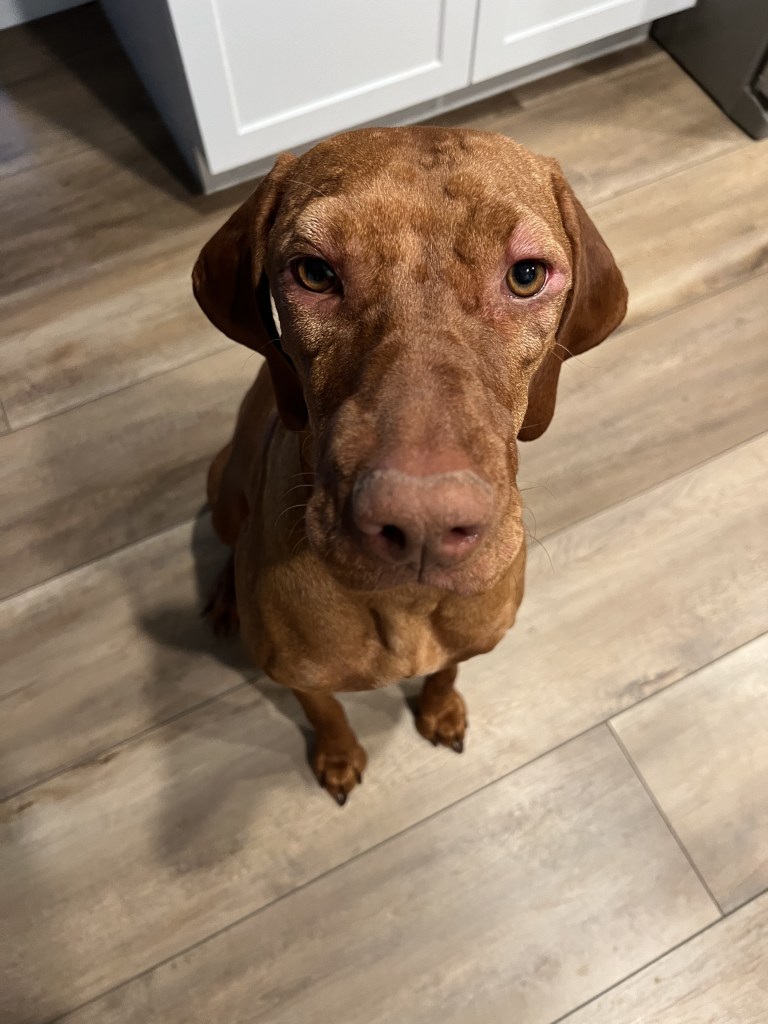
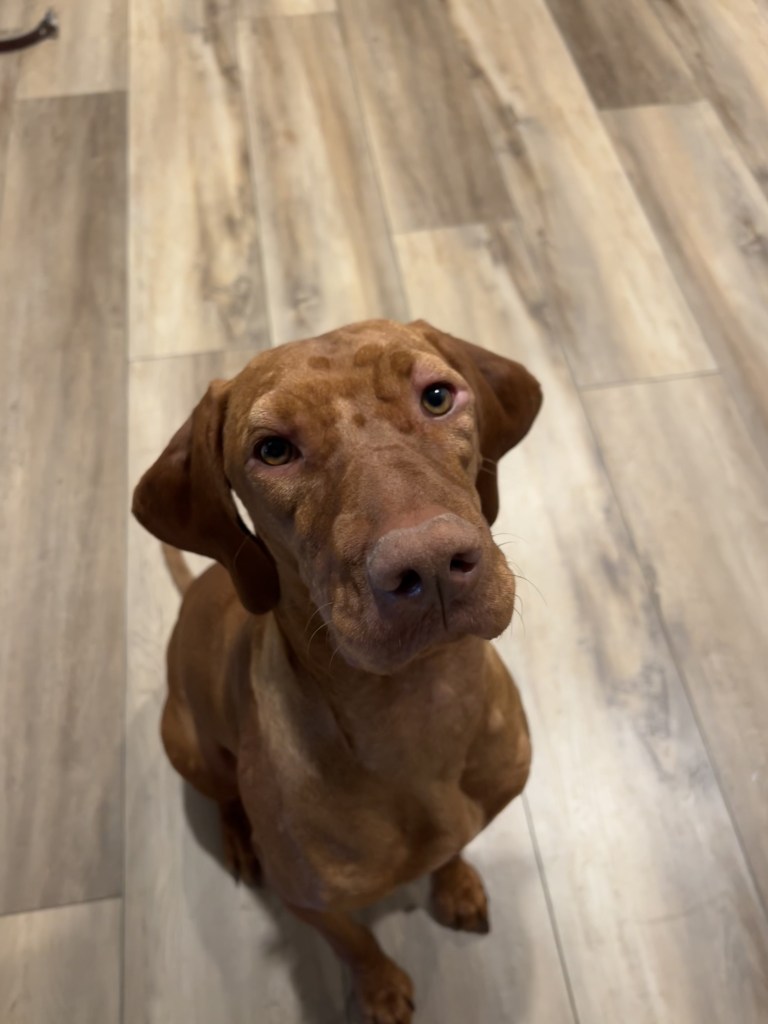
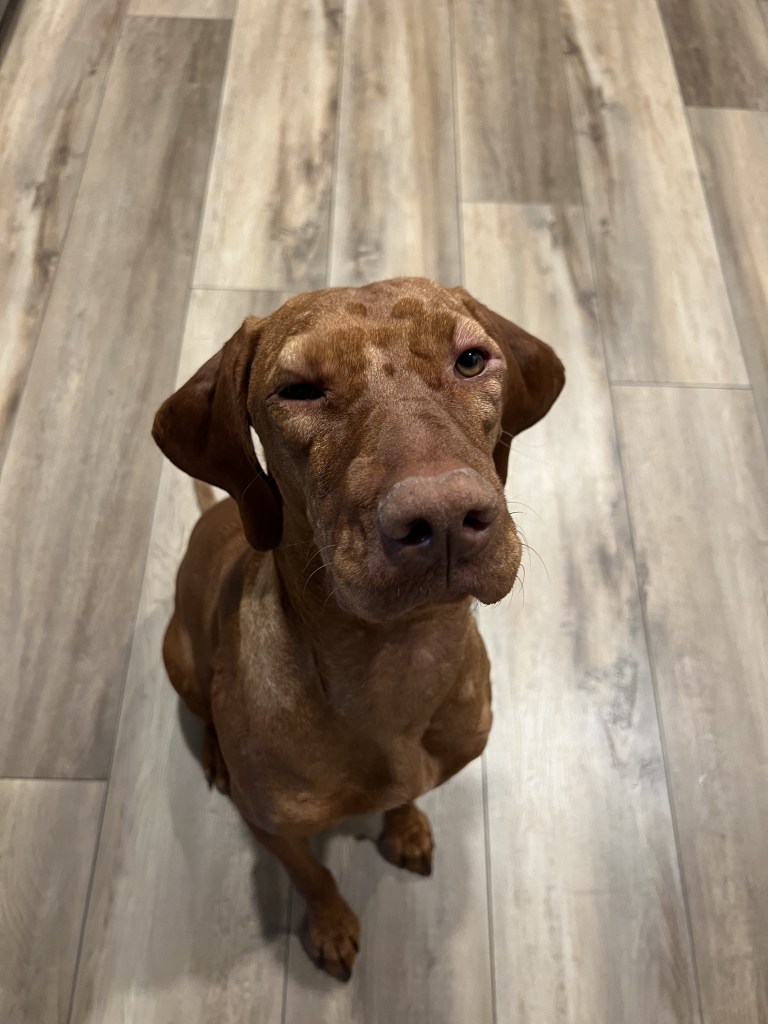
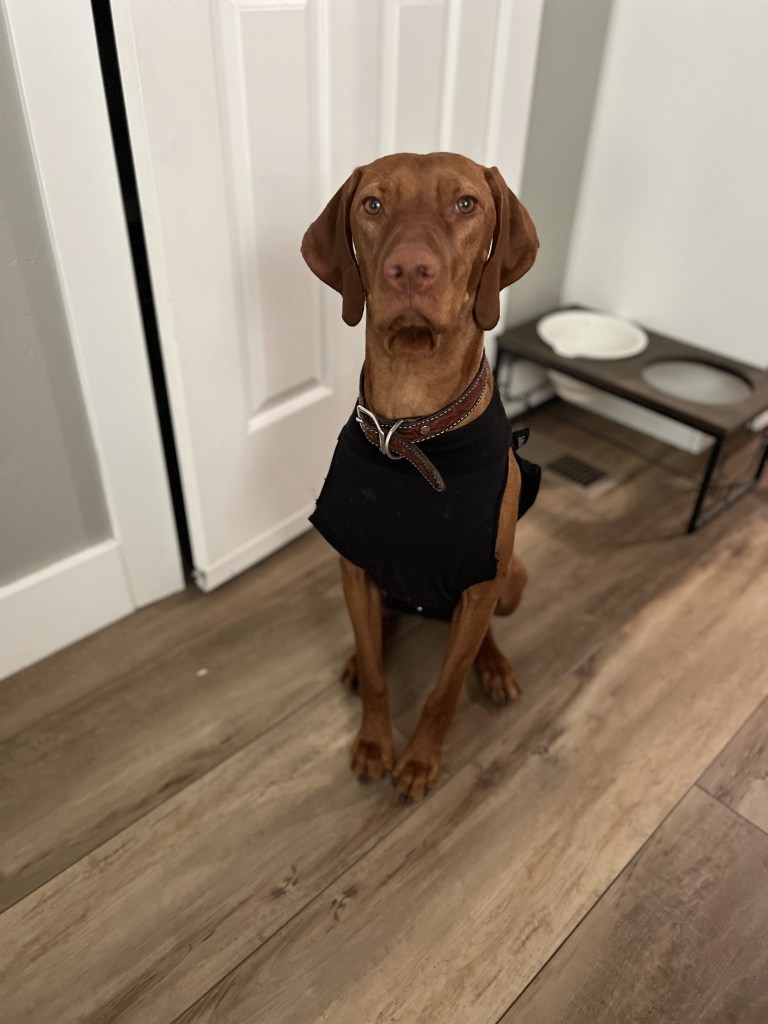
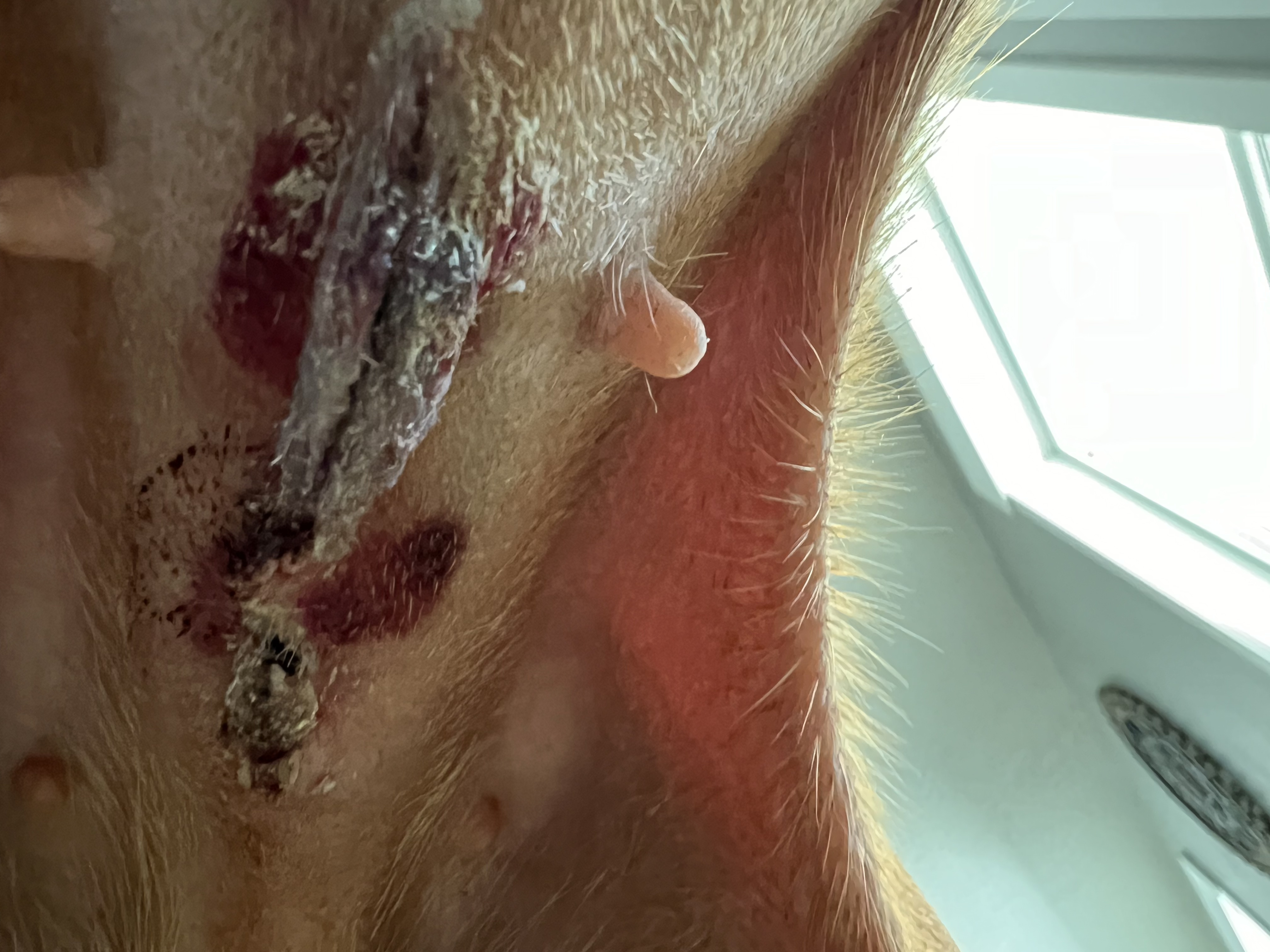
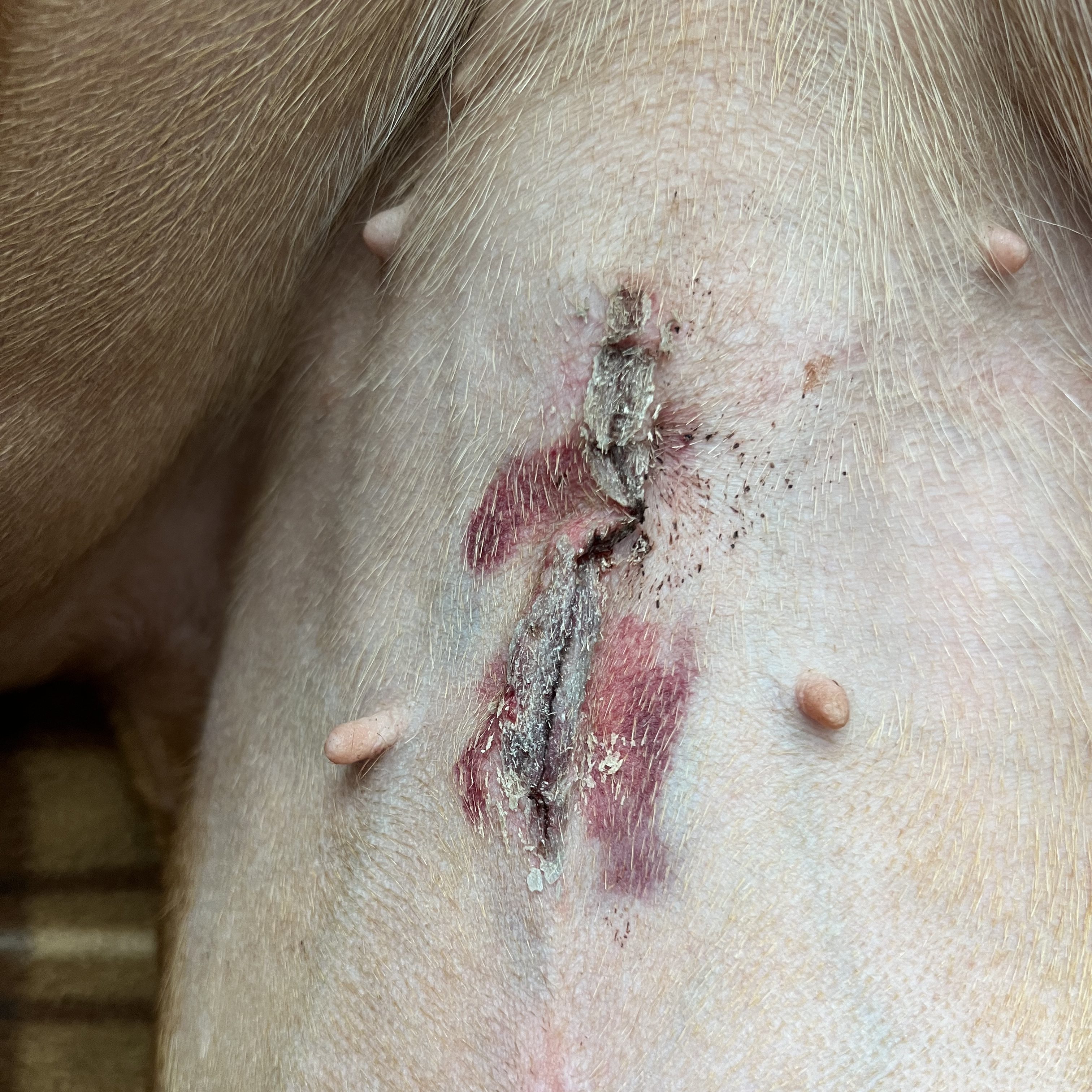
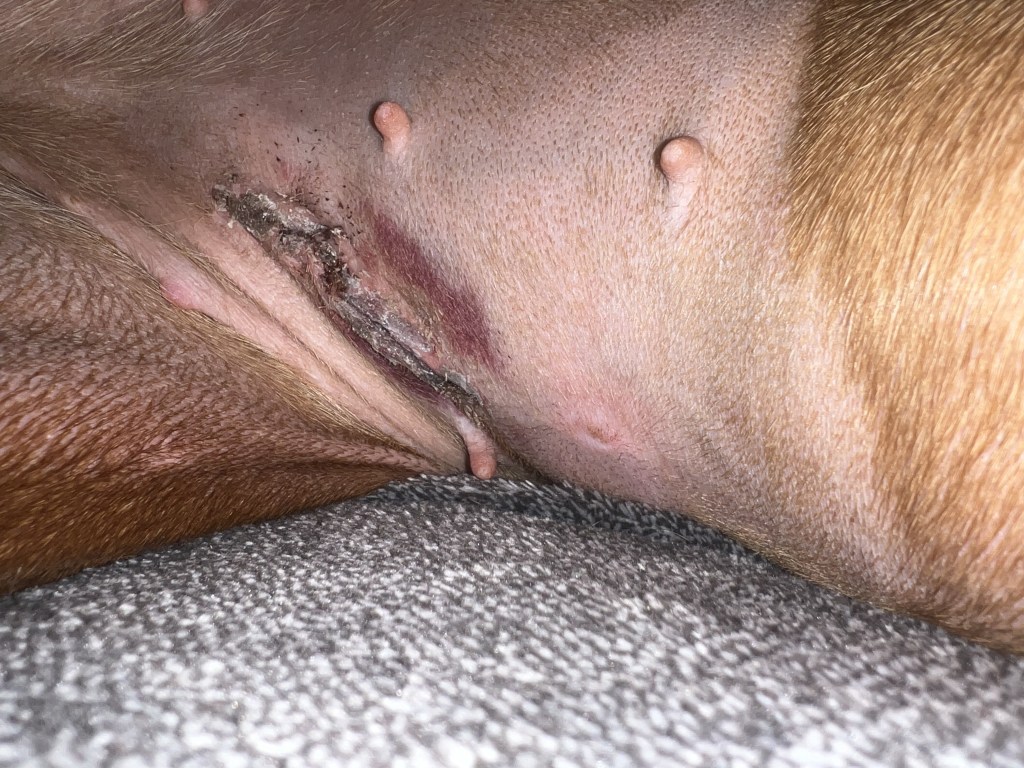
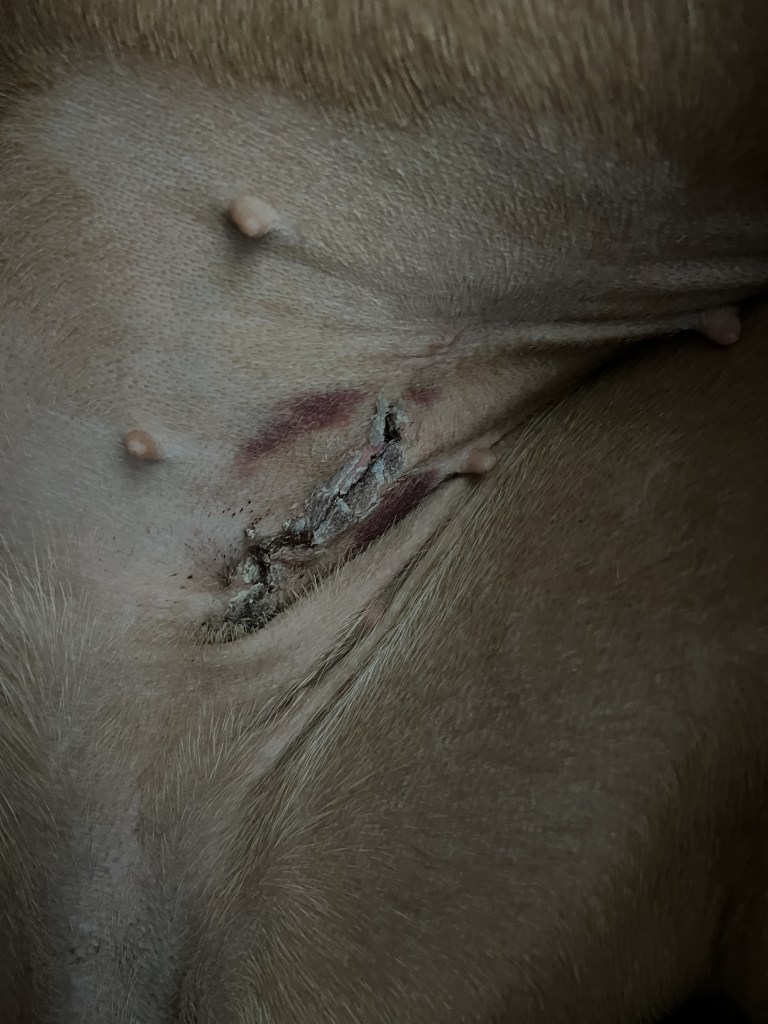
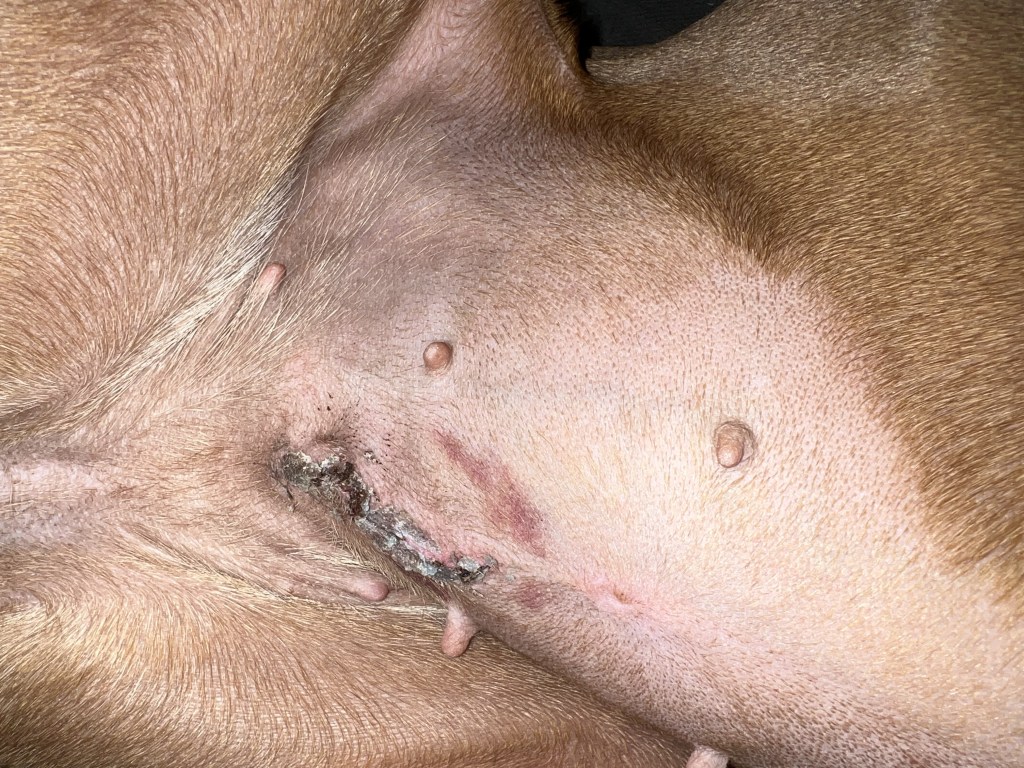
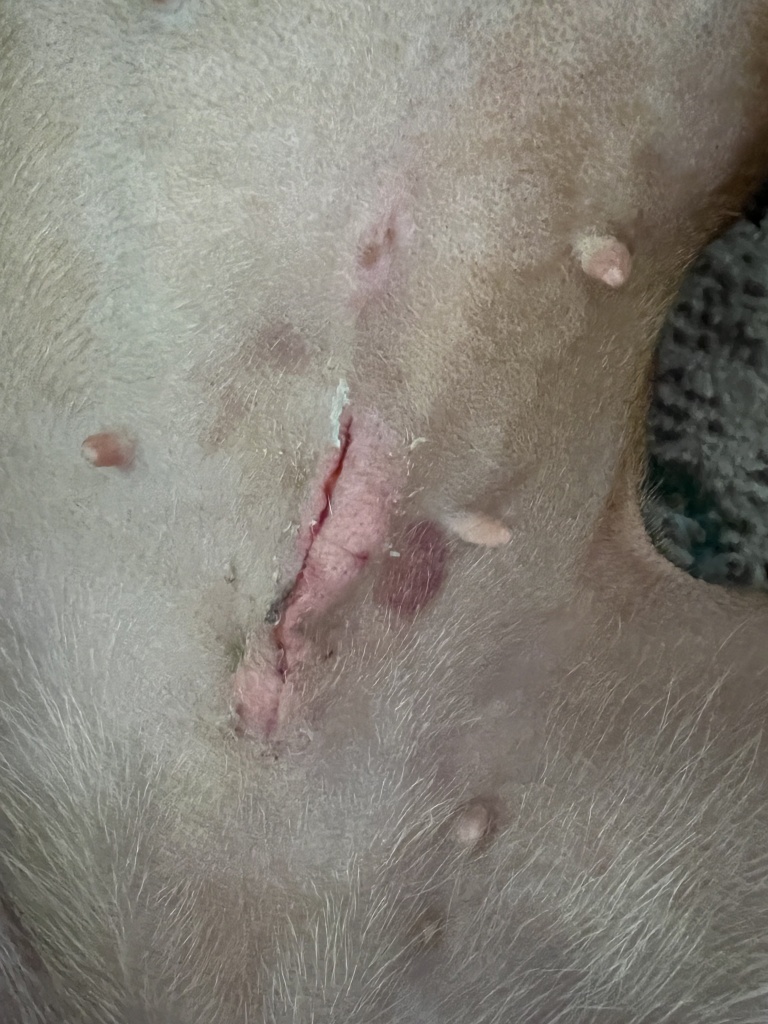
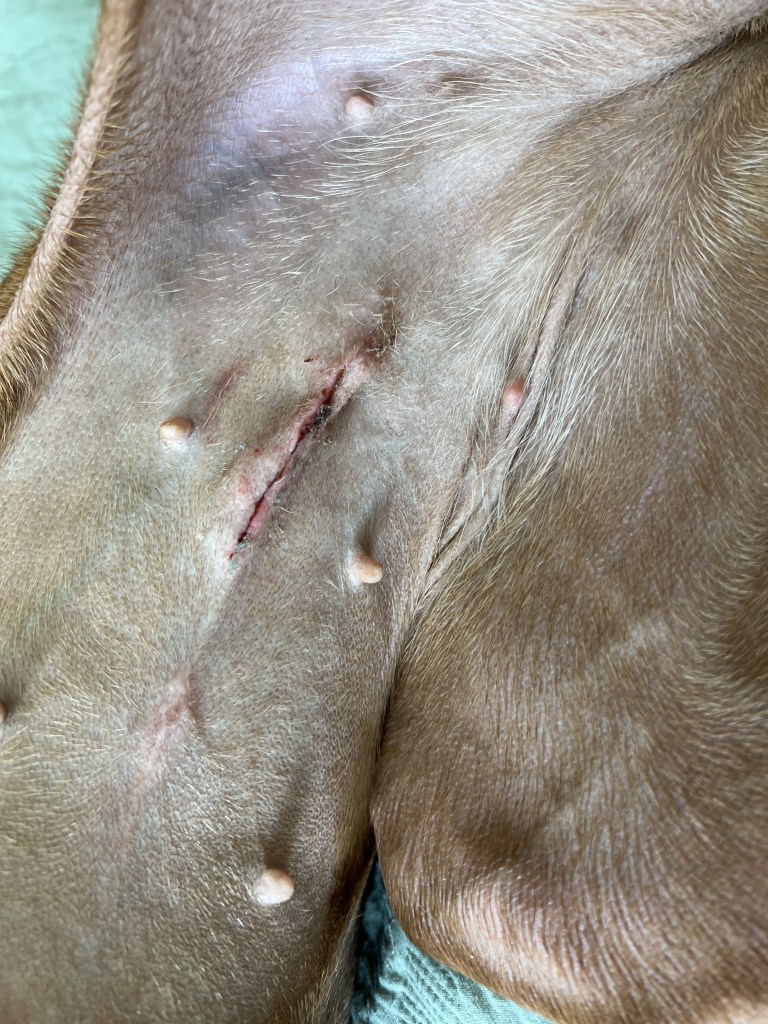
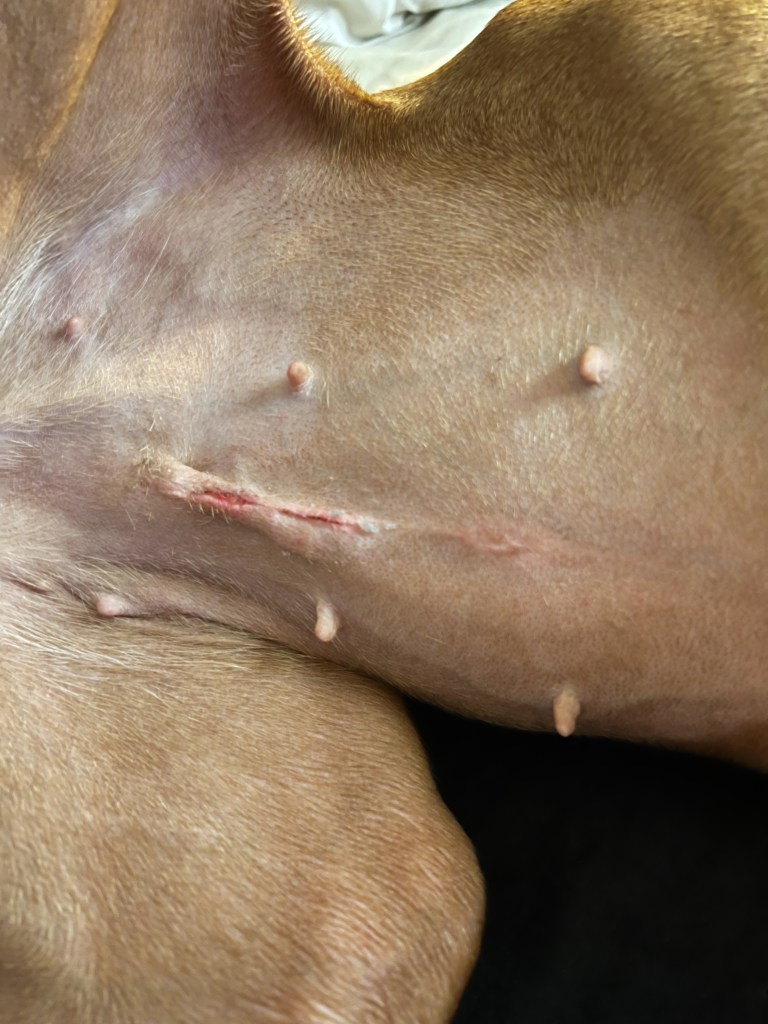
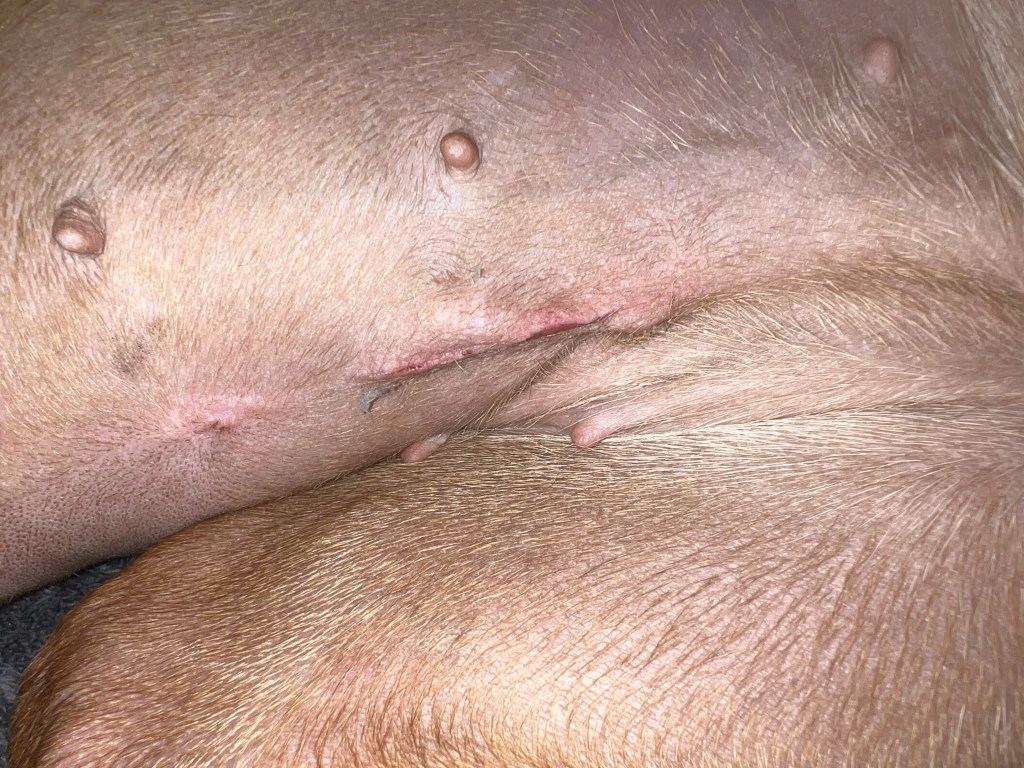
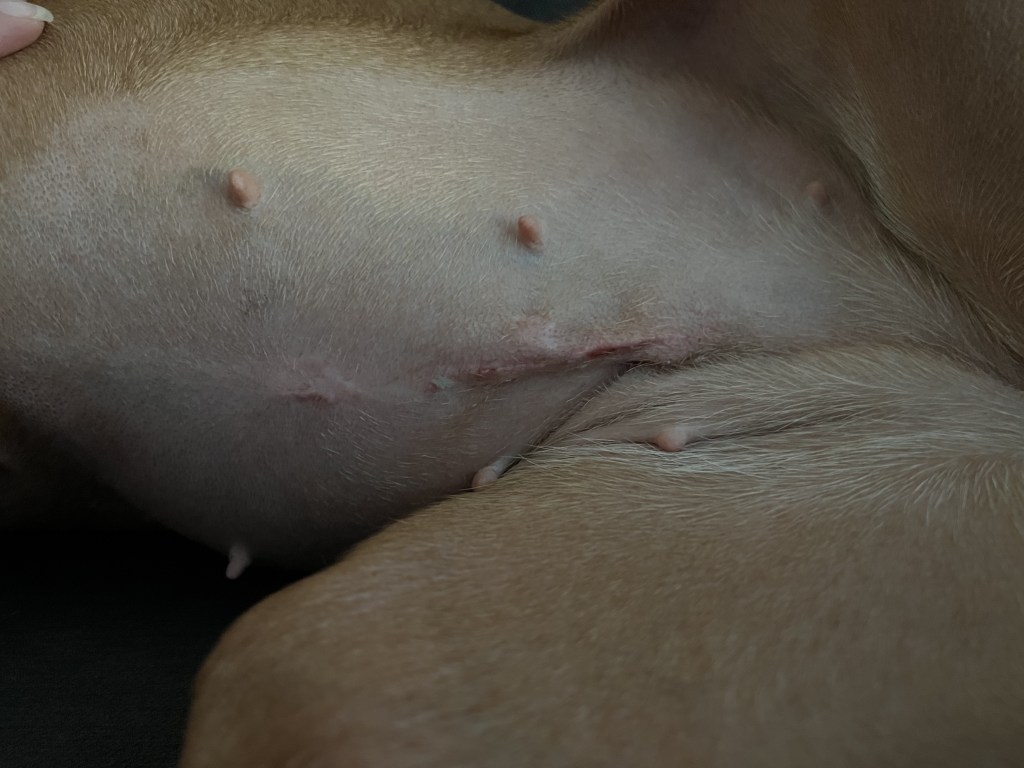
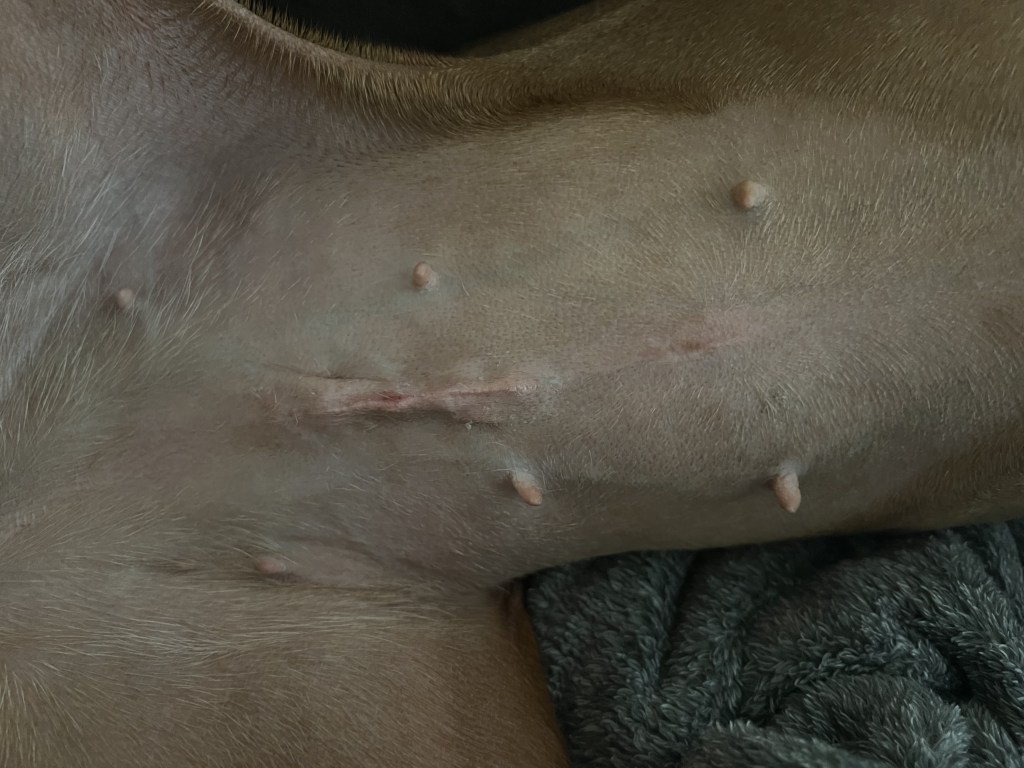
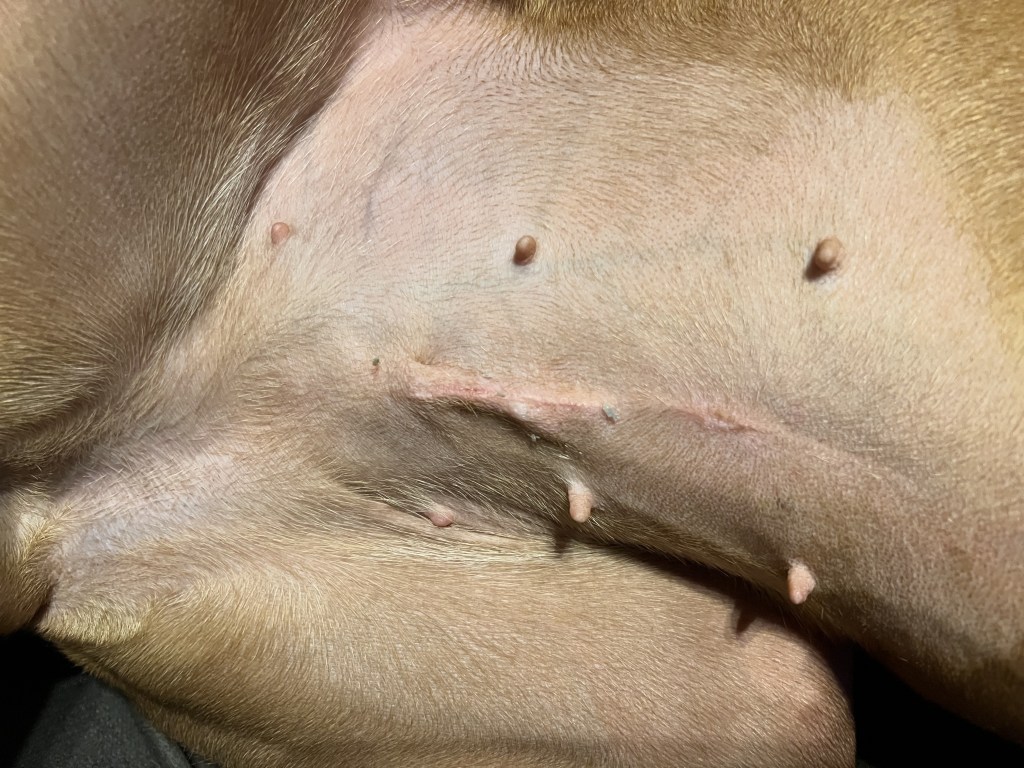
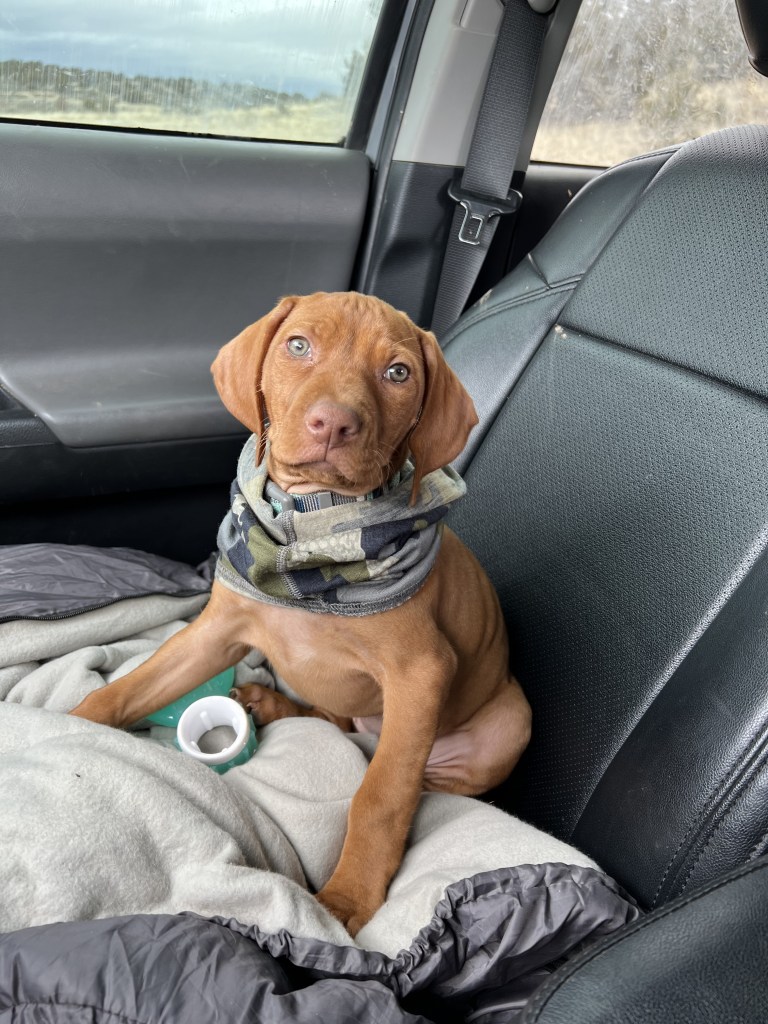
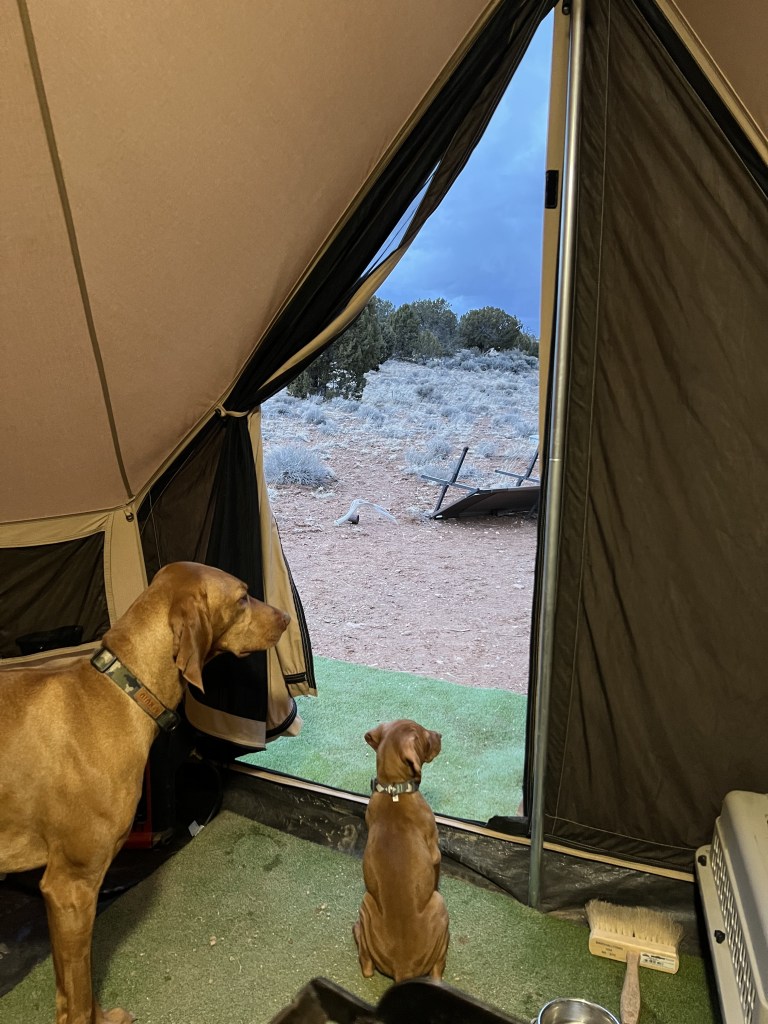
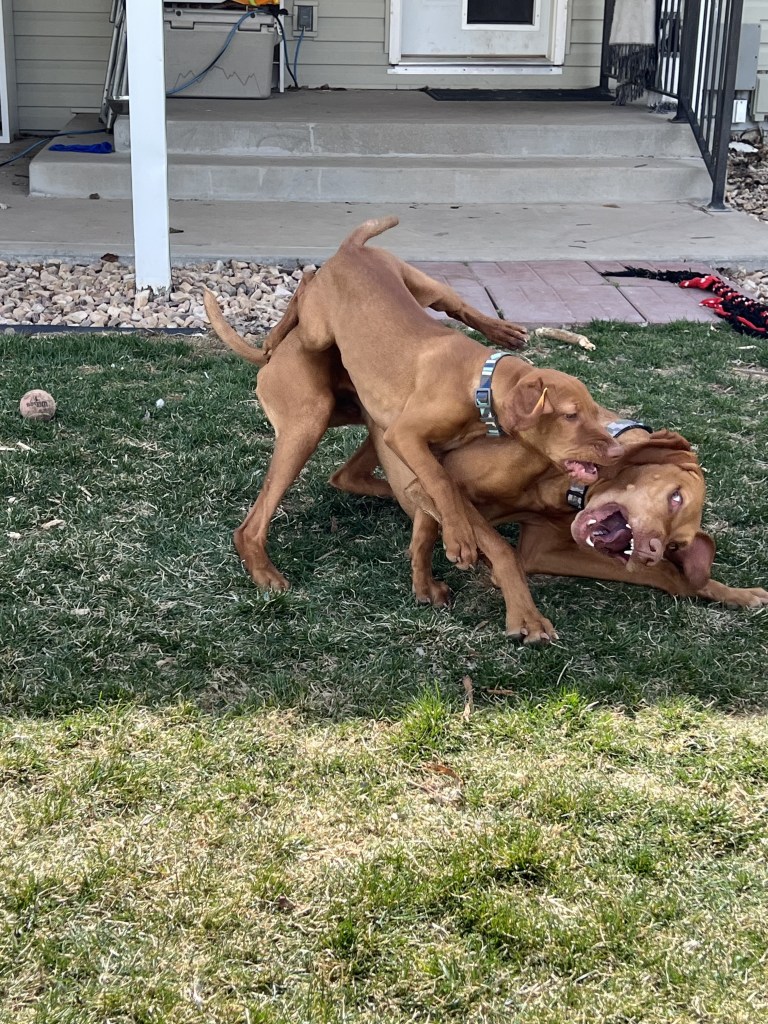
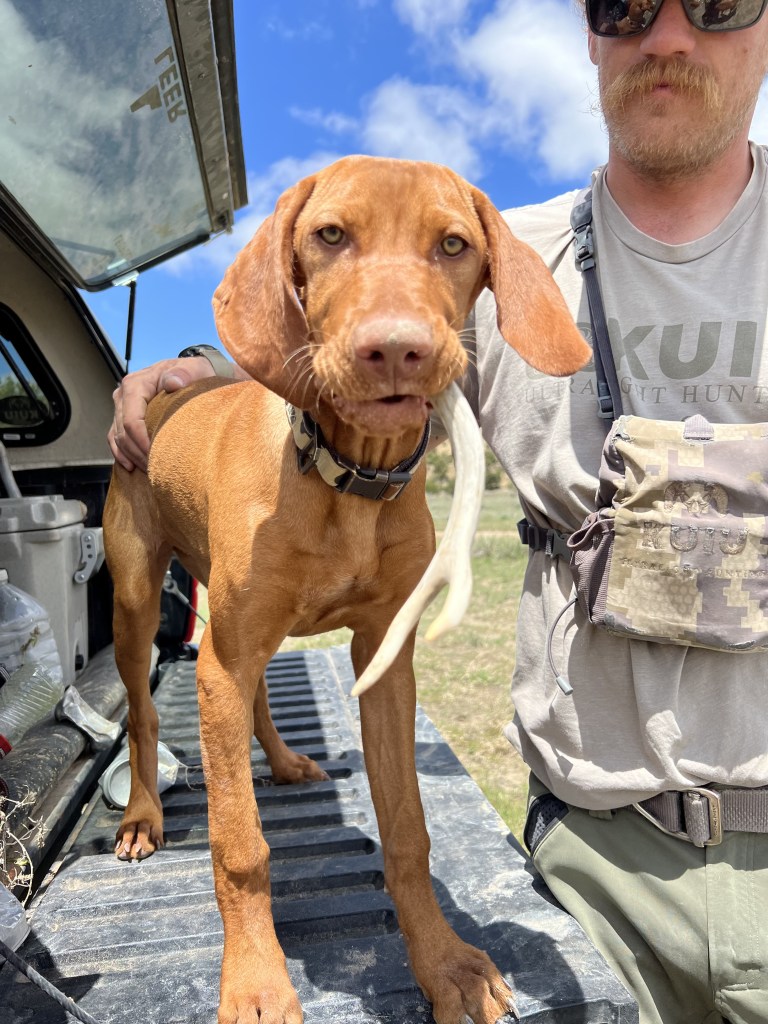
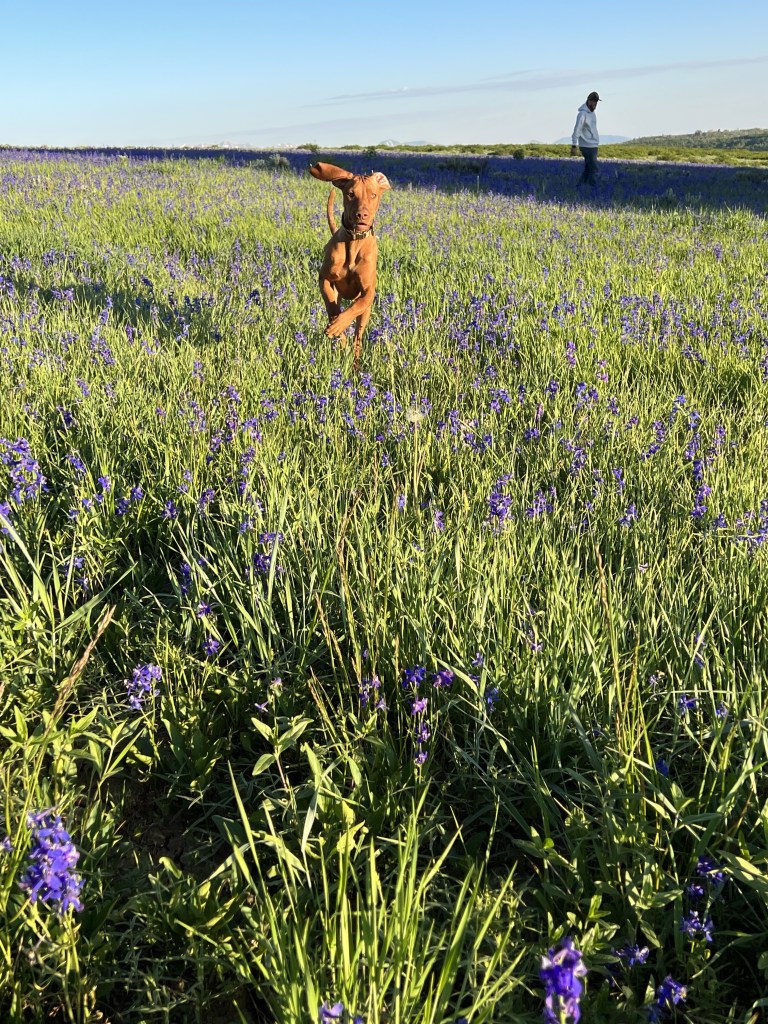
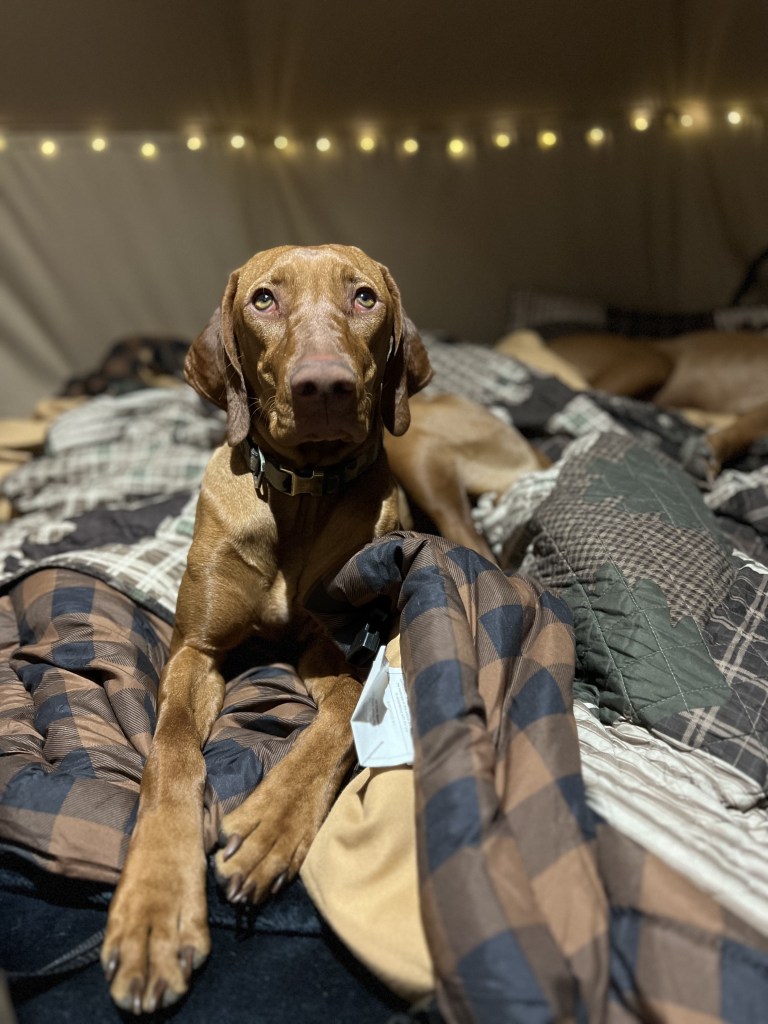
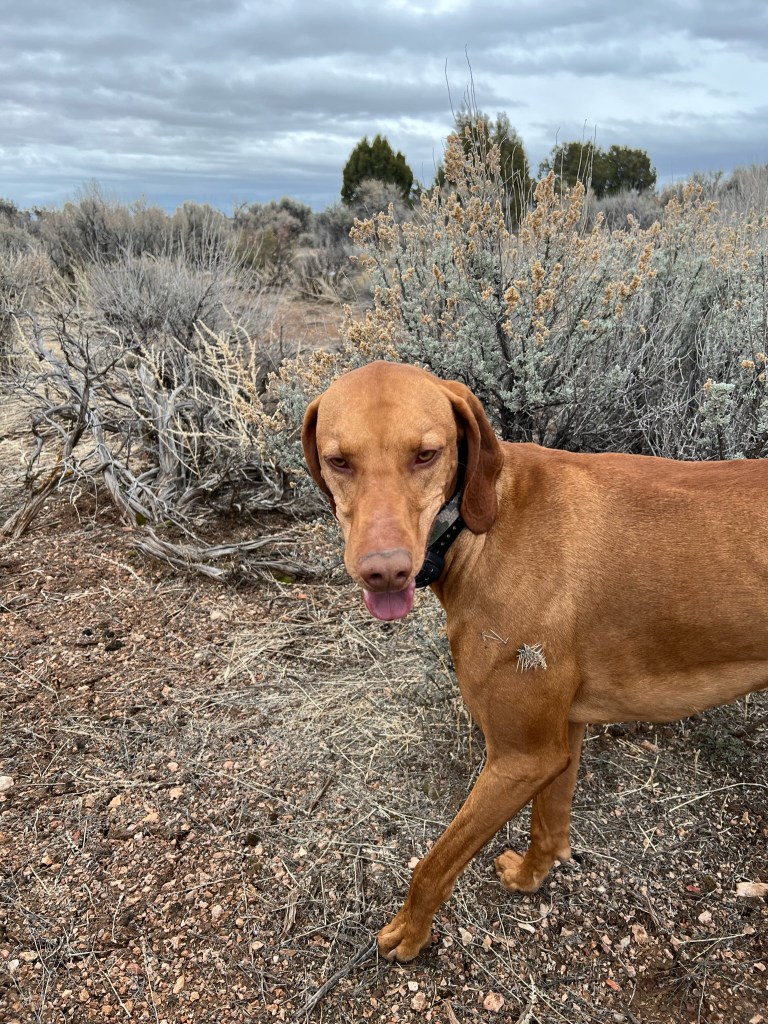
Pictures of when the hives first appeared, in my panic state to get her to the vet, I unfortunately did not get images of how severe it really got – just imagine these pictures below but about two times worse and all of her body:




 The Copper Dogs