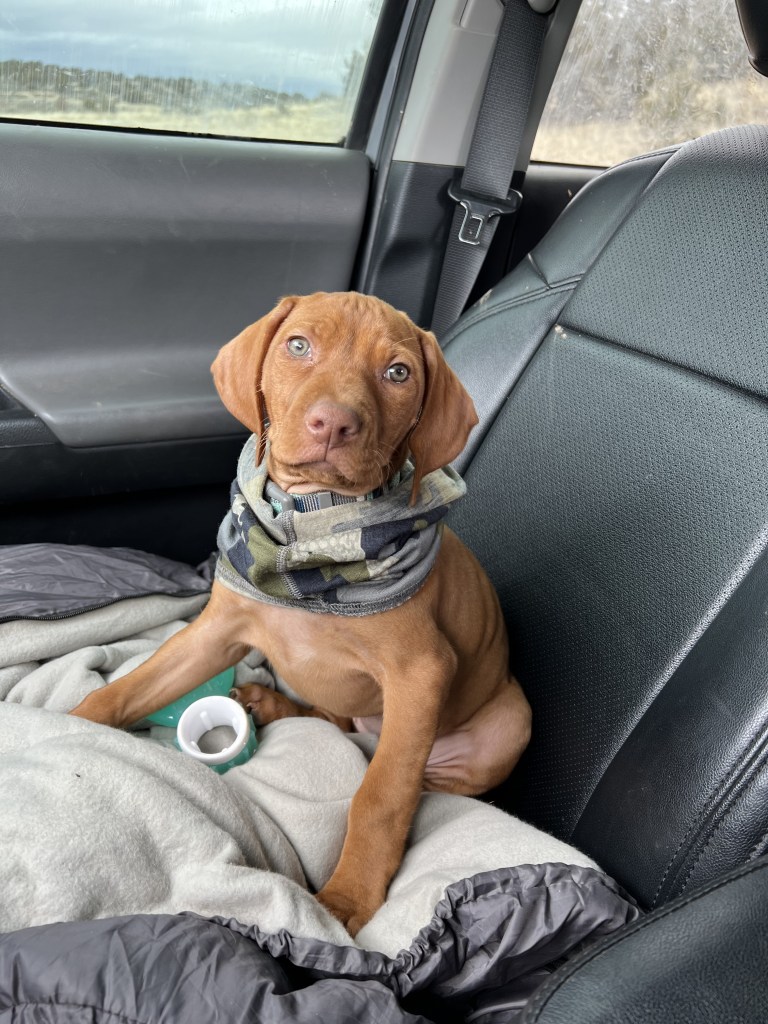
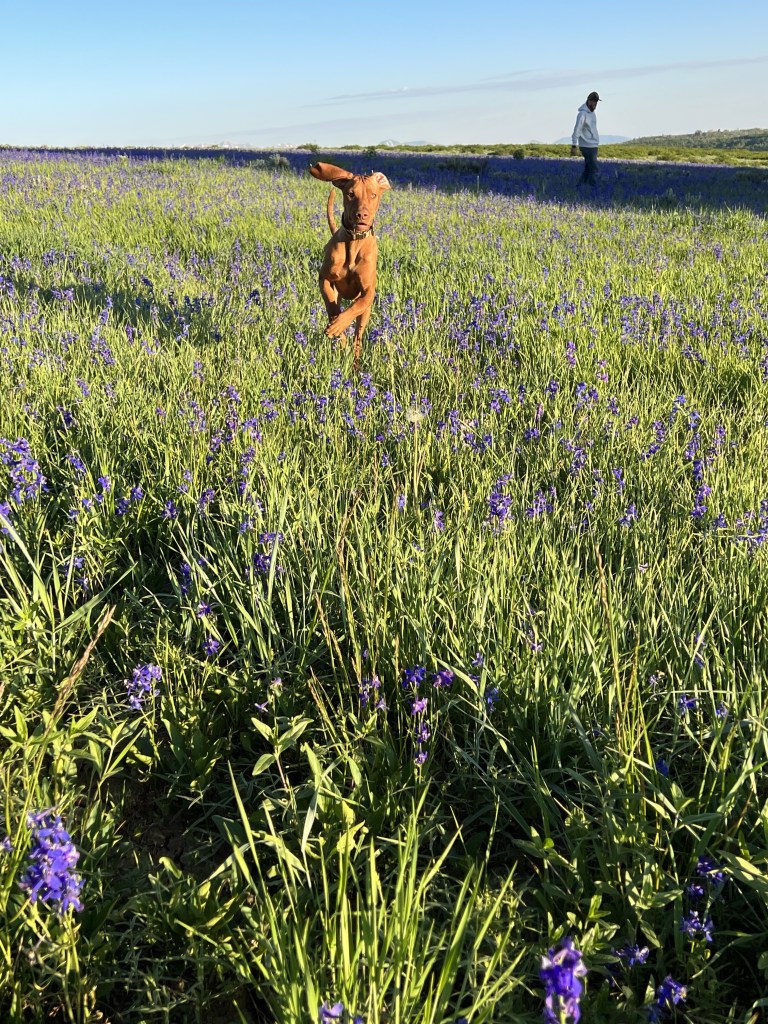
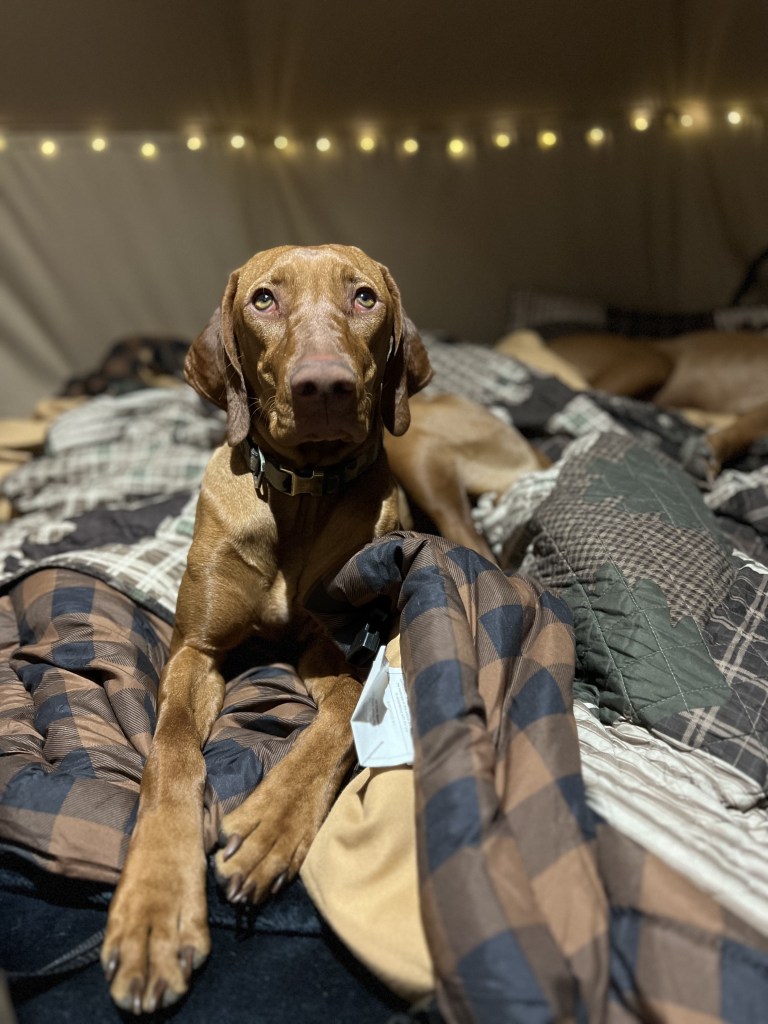
Cinching Wild Quaky Path aka Cinch aka Little Copper Dog has officially been with our family for a year – and what a year it has been. Cinch has brought so much fun, spunk, and cuddles to our family that even Roper (The original Copper Dog) has become wrapped around her little paw.
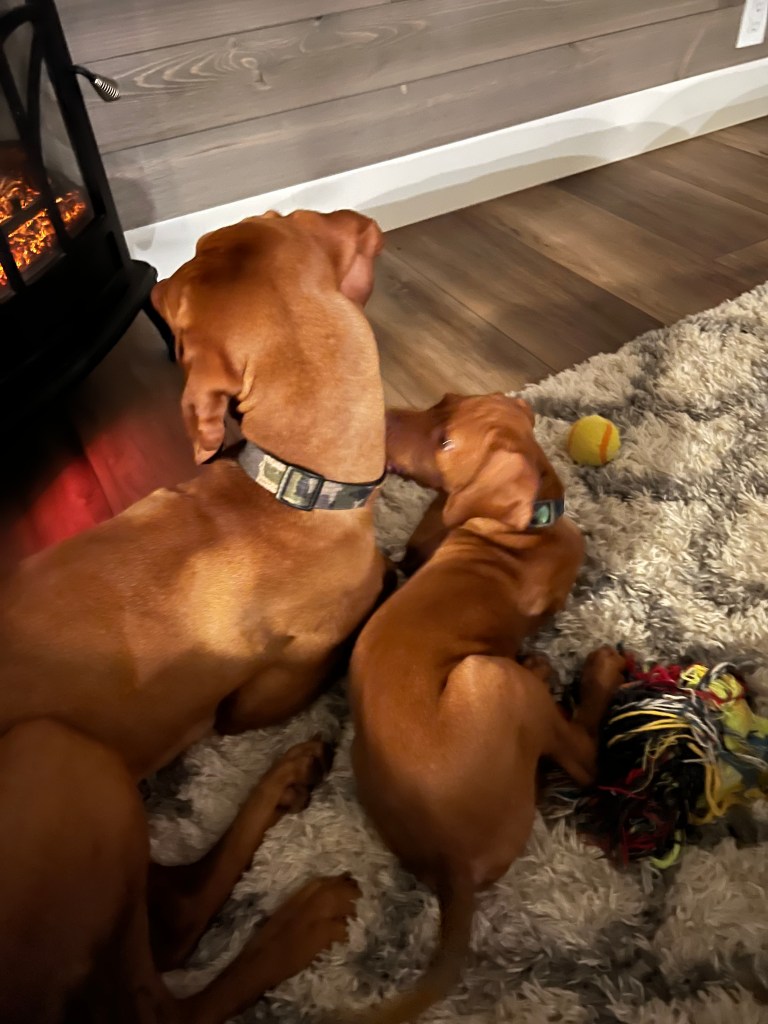
Cinch girl is a 1 year old Vizsla and every ounce of her is pure Vizsla, made up of energy, velcro, love, and an abundance of will to work. Anyone who meets her falls instantly in love with the wild patch that she is. Whereas Roper could care less about cuddles and pets (even though when he wants them, he gives the best of the best), Cinch lives for them and tries to figure out how to get closer than touching.
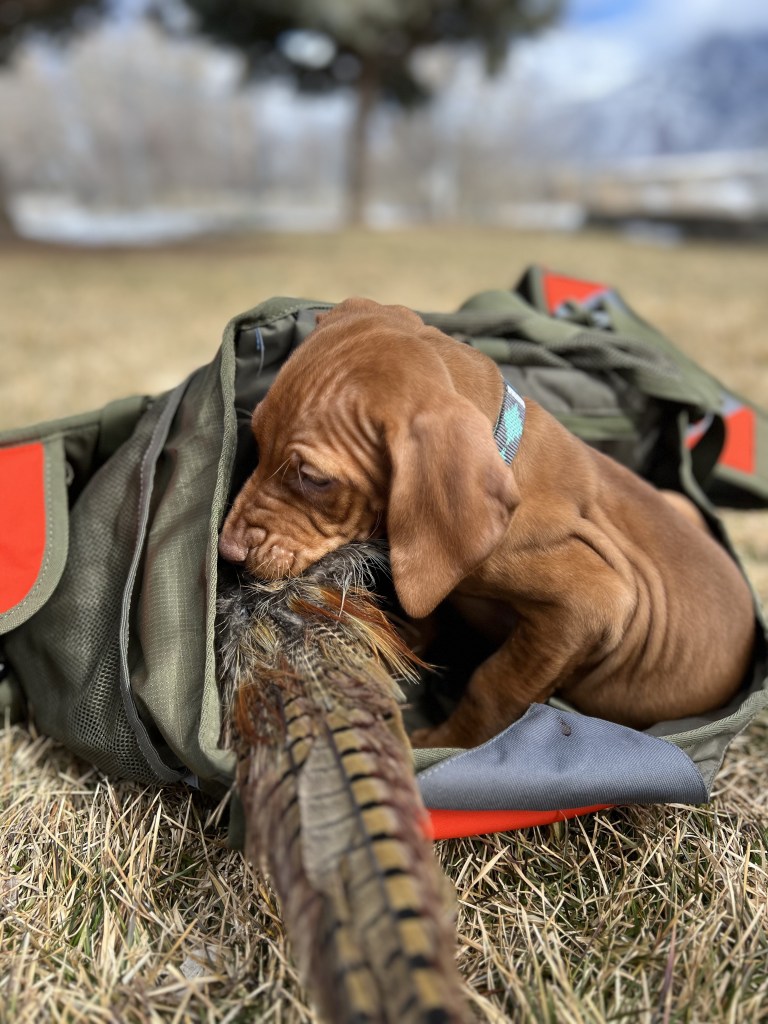
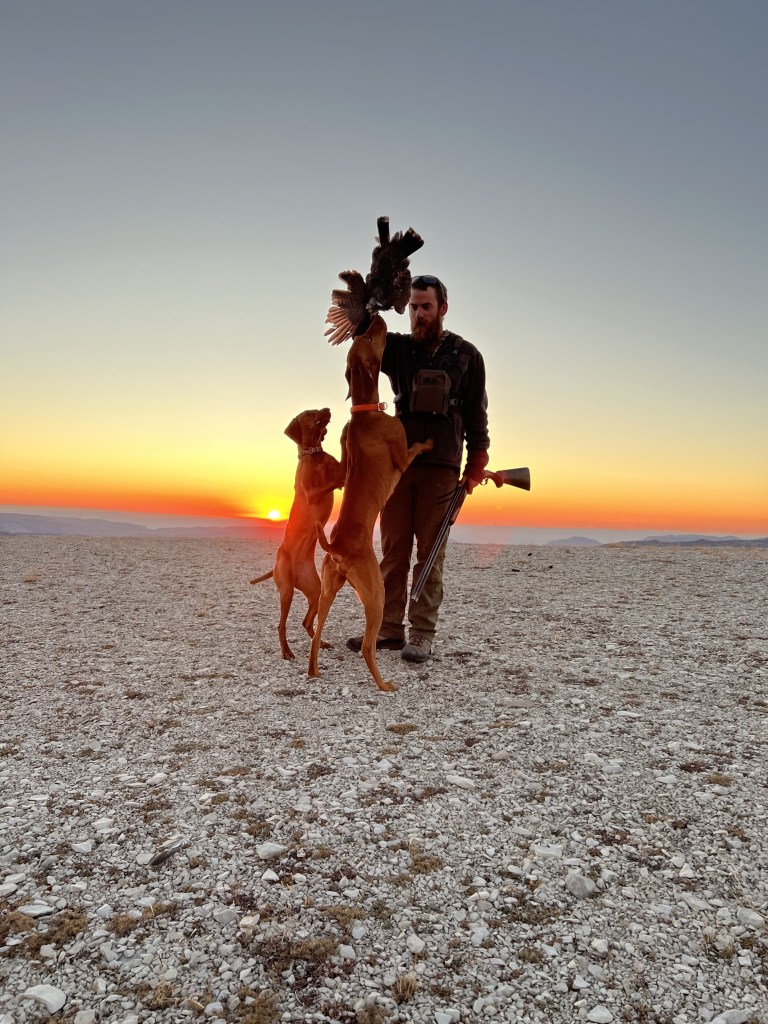
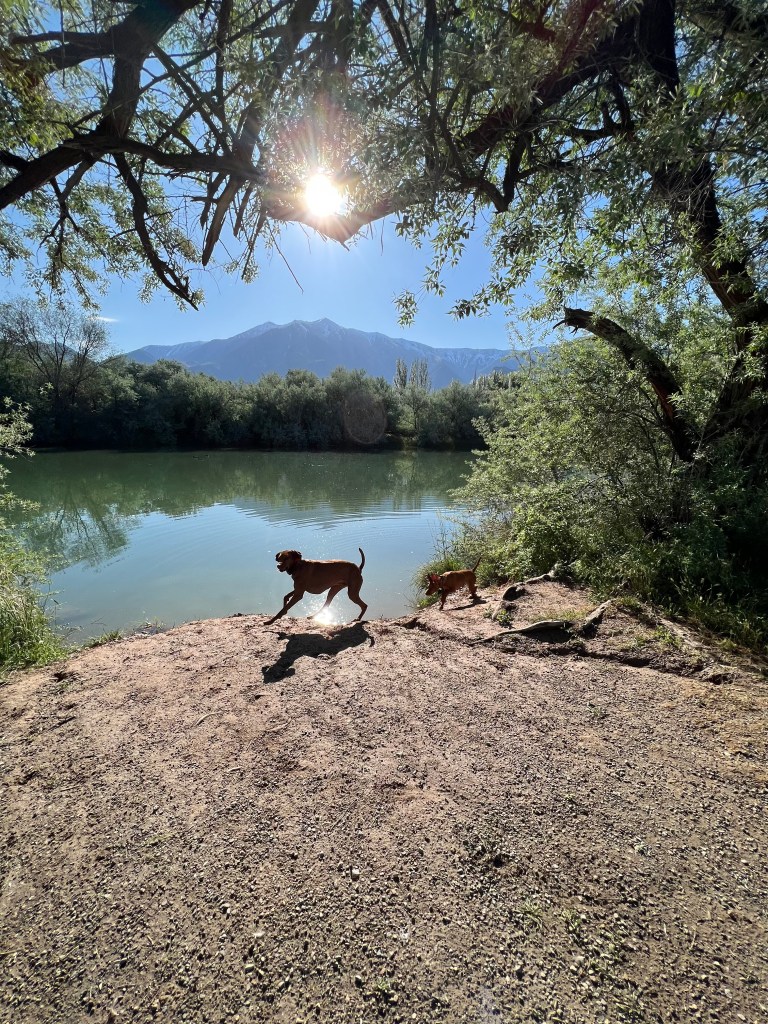
Throughout this last year, growing from puppy to adolescence, she has adapted to our outdoorsy lifestyle like the versatile hunting breed that she is and loves all things birds, bones, and big game.
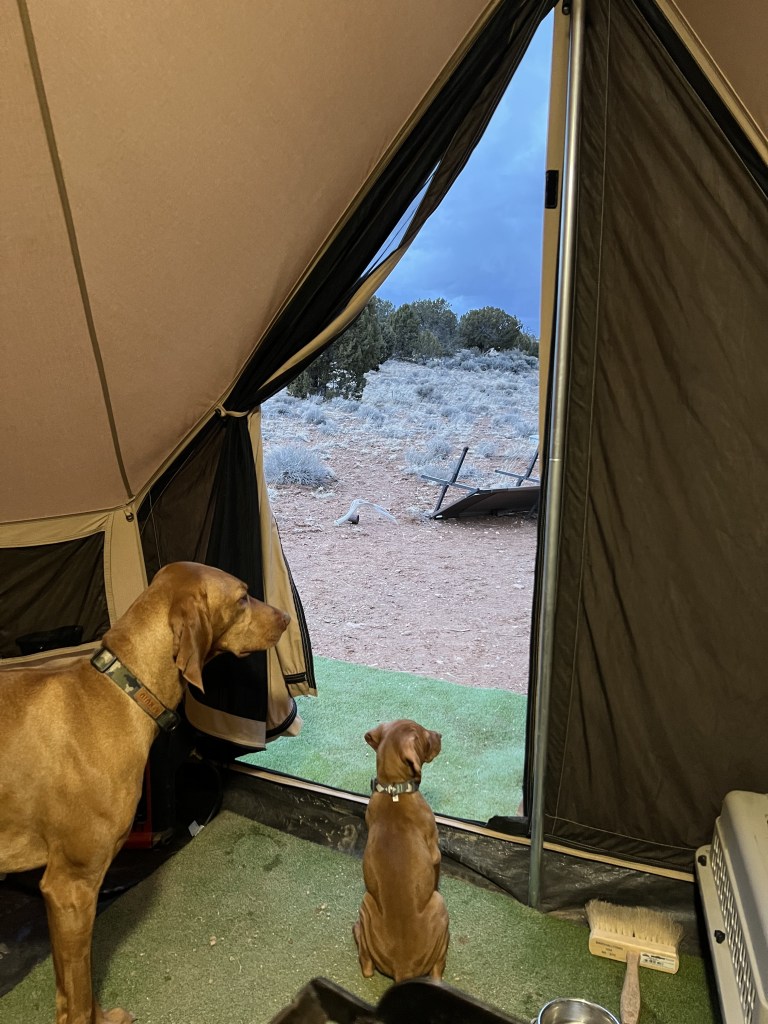
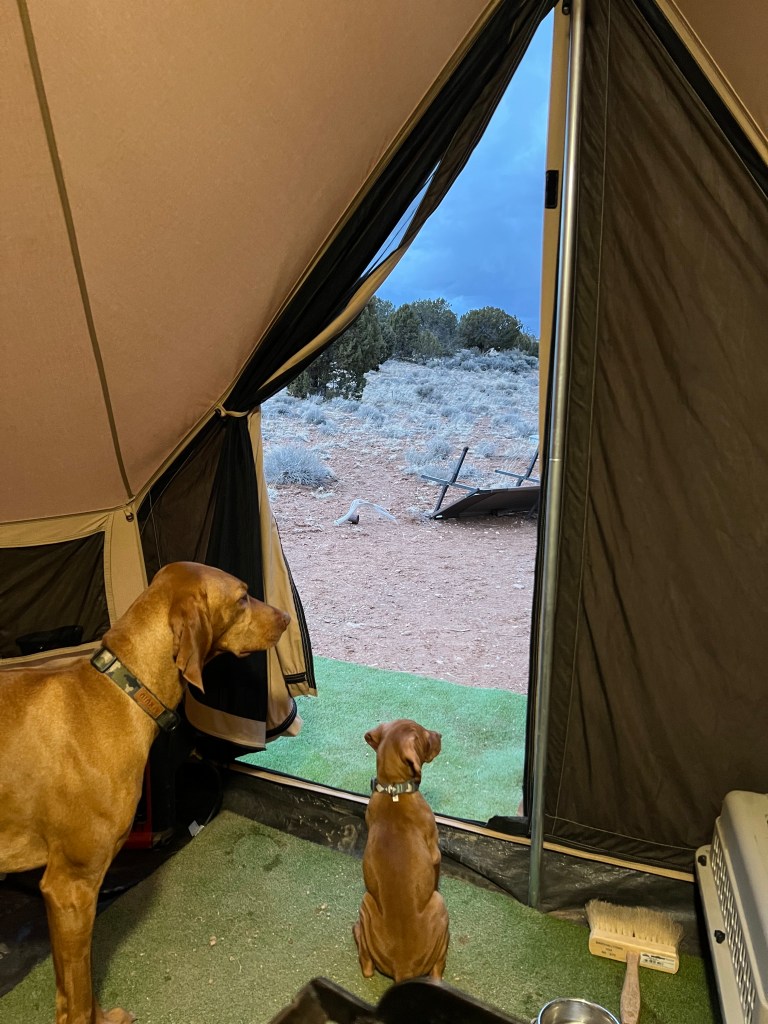
It all started during her first camping trip at the whopping age of 14 weeks. We’re crazy, we know. But after that first time, the tent and wild outdoors became a second home to her. She joined us on all of our camping and hunting trips from that first time and has learned like her brother, what each tool means, shotgun – birds, bow & rifle – big game, no weapon – hiking!
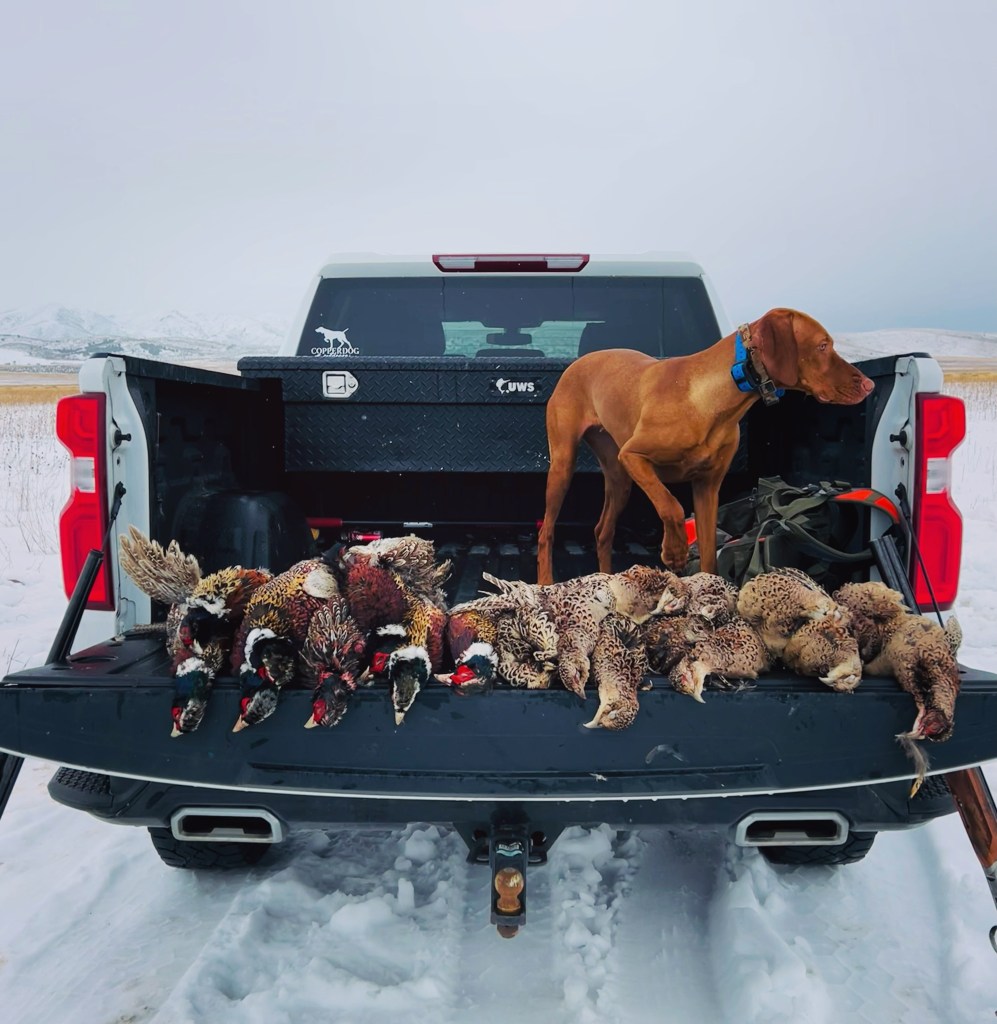
Although her first bird season was a success, she did follow her brothers lead on most hunts – letting him do the pointing and her the fun part – flushing! She has proven to be a great little bird catcher when they take off running from just being winged. We’re hoping to work on her point game, as well as her retrievals.
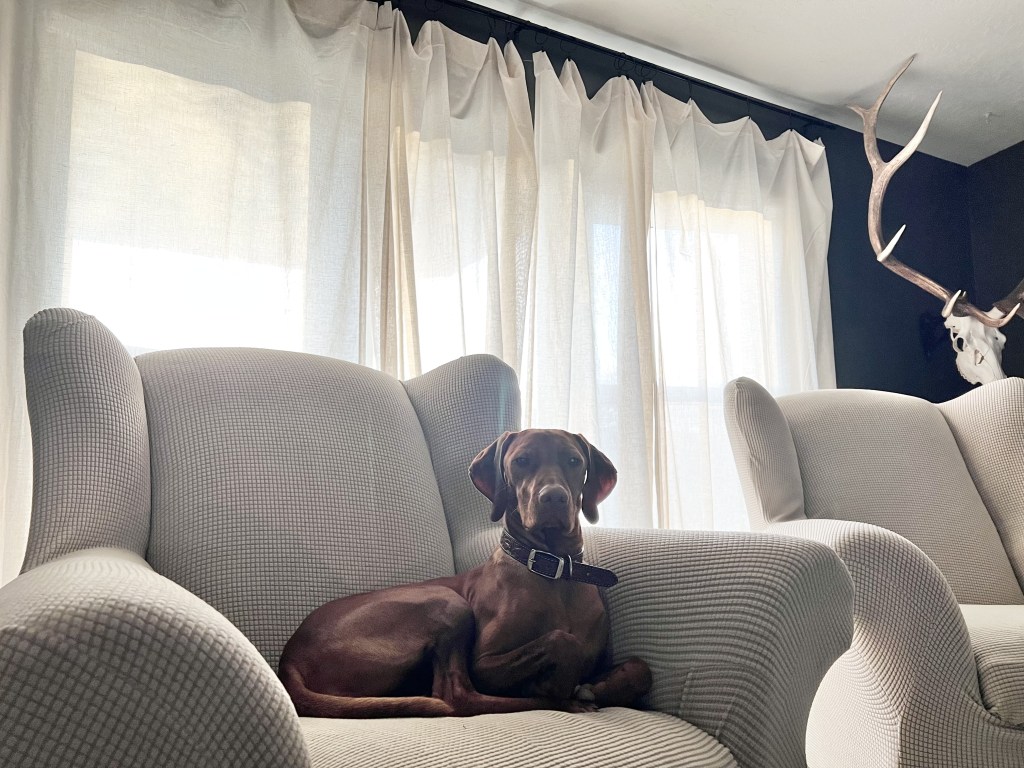
Like any good Vizsla, her work and prey drive are strong, and requires daily activity that tests her physically and mentally. Although she is totally fine lounging on a comfy couch or sunbathing on the grass, the moment she is allowed to let loose, all bets are off and she won’t be done until we tell her to. Although she may not be the workaholic like Roper, she does well keeping up with his pace.
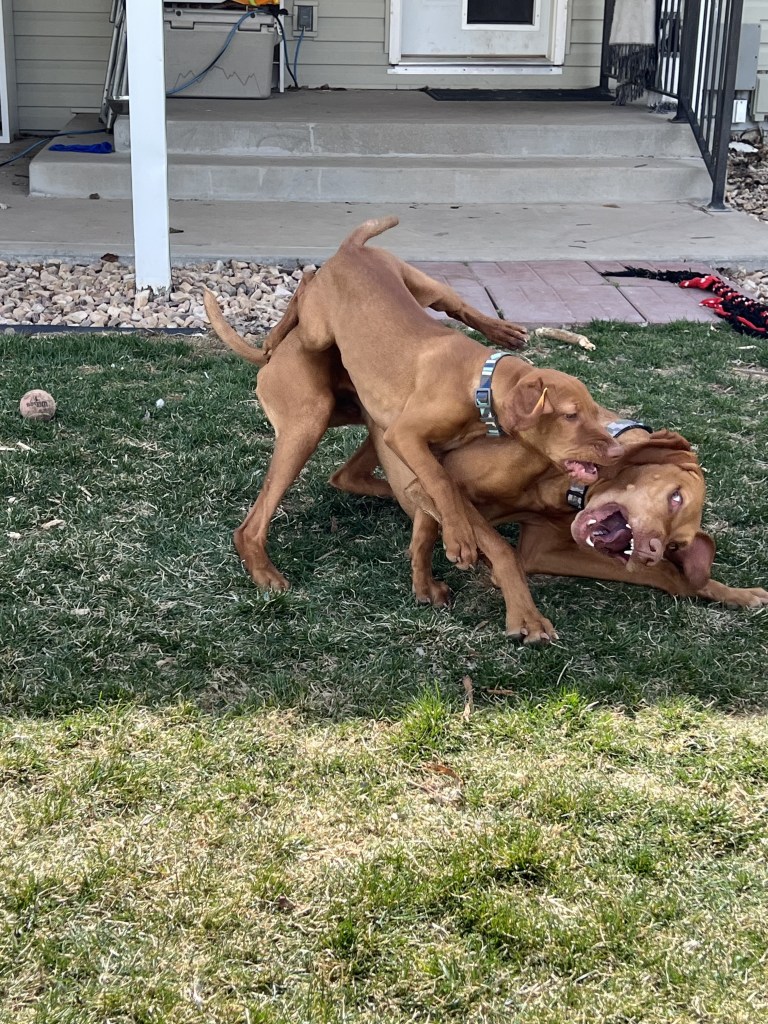
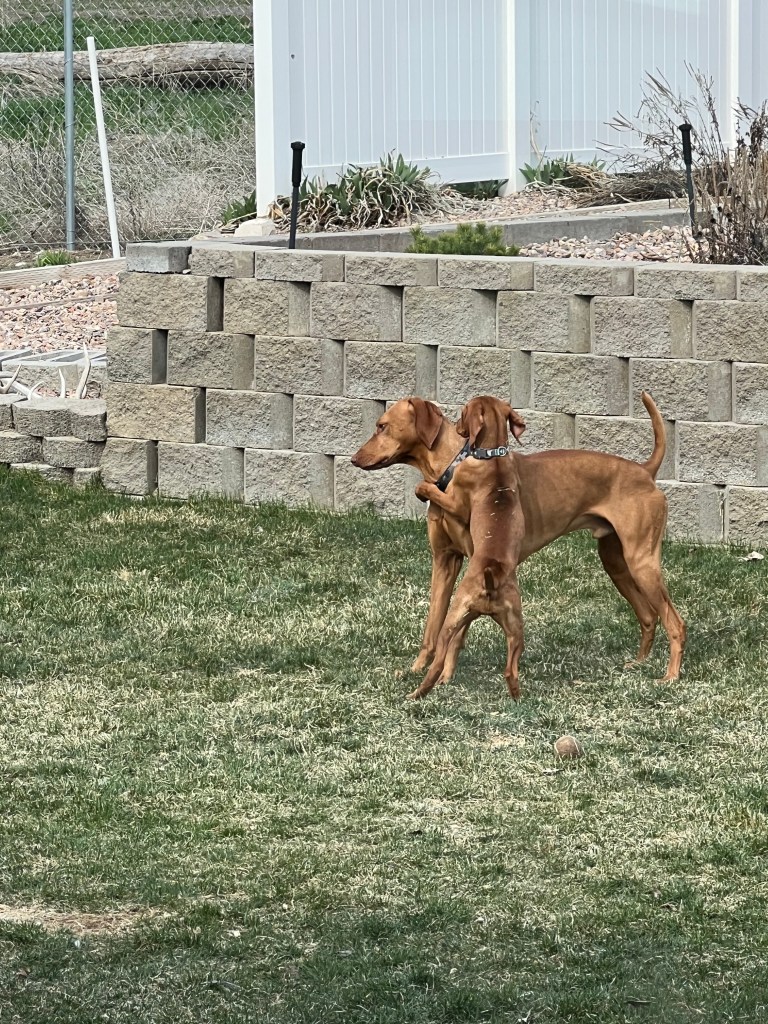
In fact, the little copper dog has completely changed the dynamics of our household. Where we use to have to take Roper on daily runs to make sure he’s getting his physical activity in, nowadays, Cinch girl is more than happy to chase him around the yard and play hard until both of them are exhausted.
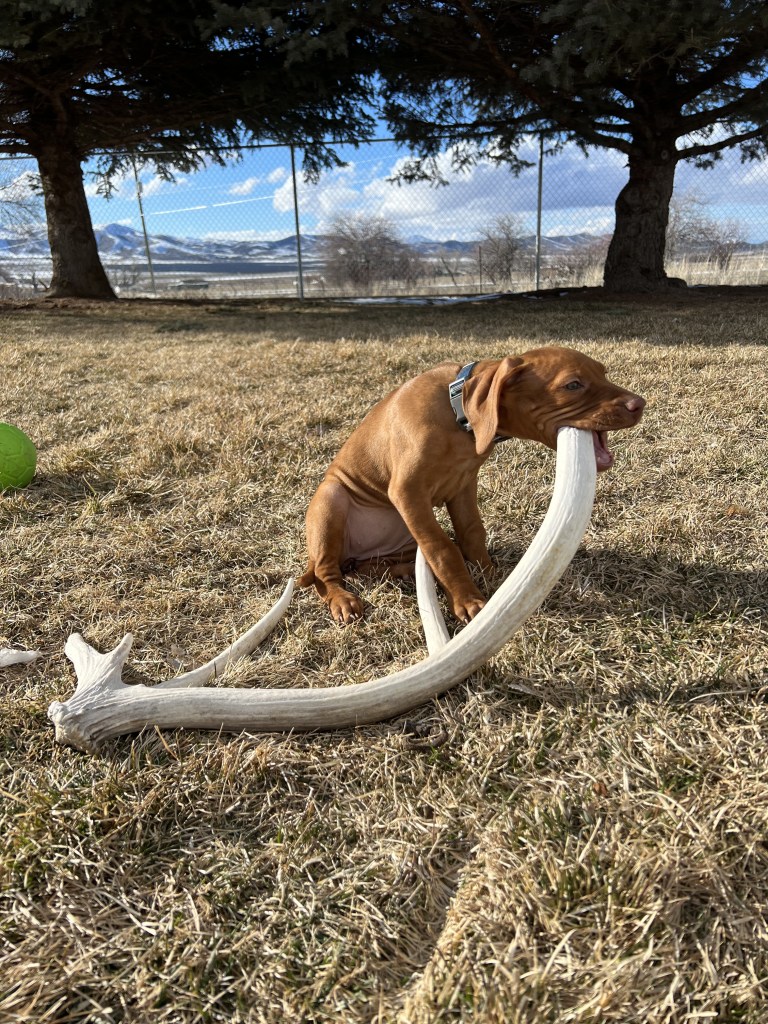
If Cinch isn’t terrorizing Roper or working, you can find her chewing on a stick or bone. We like to think she’s part beaver for how quickly she can destroy wood, and has found the “no sticks in the house” rule rather exasperating. Especially when we brought an entire tree inside for Christmas. She may not annoy you with her insistent need to have a ball thrown, but she does her part by stealing the ball and driving Roper mad.
The Adventures of Roper and Cinch are a day to day experience and we can’t wait to watch their bond grow even stronger.
Our next installment will be a Lesson From Cinch, stay tuned!
Whether you just purchased a floppy eared puppy to be your future hunting partner, or you don’t want to have a dog that is scared of fireworks or other loud bangs, then desensitizing your dog to loud noises a must.
However, it must be done slowly and strategically, or else you could be left with a scared and anxious dog. In the hunting world, we call these dogs Gun Shy. To non-hunters, it’s the dog that has be to put up in a room in the house with the TV blaring so they can’t hear the fireworks on the 4th of July. But, what most people do not realize is that a dog is not born Gun-Shy. It’s created.
Developing a plan to introduce your dog to guns (or loud noises) can be a challenge within itself, because of the amount of information available. The internet tells you to wait until a certain age before any type of loud noise is implemented into the dog’s life, while your uncle that’s had dog his whole life says “don’t listen to any of that crap and just take your dog out in the field and shoot the gun, it’ll be fine”. And we all know it won’t be fine. Which is why I’ve put together the most helpful tips that I have found while training puppies to be hunting dogs, including what to do when a gun blast is finally introduced to the dog.
Tip #1: Determine The End Goal
This one isn’t a tip for the dog, but rather you the handler. Determine what it is that you want your dog to feel comfortable doing. Is it bird hunting with shot guns, the slam of cattle guards out herding, or is the outcome to just not have a noise sensitive dog? Either way, before starting any training plan, know the end goal, or else you will never find your way there with the consistency that is needed when training a dog.
Tip #2: Bring out the Pots and Pans during Feeding Time
Feeding time is the perfect opportunity to start introducing soft bings and bangs. And since pots and pans are the source of all unintentional loud bangs in the kitchen, they make for great natural training aides. Before you run into your puppy’s feeding time banging on a pot like it’s the New Year, begin by lightly hitting the pot with a wooden spoon while standing at least five feet away. While you make the noise, you may notice that your dog stops eating for a second. If they continue to eat after a moment, you may continue the noise. If they stop eating all together, put away the pot and try again tomorrow. This first part will take patience, but as the days go on, you will be able to increase the noise level you make. The purpose behind this technique is to train your dog to associate something good – like food – with loud noises.
Tip #3: Utilize Background Noise
Ever notice how when you’re focused on something you don’t notice or hear life going on around you? Puppies go through the same experience. If they’re totally tuckered out, or out in the yard romping around, utilize consistent background noises to build disinterest in sounds around them. Not one time loud noises that will causes startling, but something that can create noise for a period of time. Like a speaker playing music, TV, your neighbors power tools, or even the vacuum.
At first, your pup may notice these sounds, especially when they first start-up, but if they were sleeping, simple pets and/or soft coos will more than likely put them right back to sleep, especially if they are under 3 months old. If you are out playing, get excited and put their attention back on you or their toy. By teaching them how to become disinterested in noises will also help you in training them how to ignore things on command. (Our go to is “Leave it”).
Pro-Tip: Have access to a construction site that would be safe for a dog? Or is there construction going on next to a park? Take them! Construction can be extremely loud, but if they are spending time with their favorite human and exploring new territory, they will immediately forget all about the loud noises.
Tip #4: Introduce Recorded Sounds
Whether it a shot-gun blast or a fire-work boom, these are the most common noises to make a dog shy. However, the first time they hear these sounds does not have to be in person where the noise level is overwhelming. Before actually introducing the puppy to the loud noise it will be around, start by playing the recorded sound of said subject. Obviously not at an ear piercing level. If the end goal is hunting, playing hunting shows on the TV with the same type of gun you will be shooting in the field, and the same prey type, will help familiarize your puppy with the sounds it will eventually be immersed in.
Tip #5: Introduce Gun shots between 5 and 6 months old.
Introducing a gun shot to your dog should happen between 5 and 6 months. If you wait too long, your risk of having a gun-shy dog goes up. Same if you start too early. On the day of the introduction, use the following steps to go from bird dog to gun dog:
Step 1: Determine which gun you want to train with. I always opt for a shot-gun since that is the gun used while bird hunting. If your dog is going to be hunting with different types of guns, feel free to bring them along if all goes as planned to shoot them after the initial introduction.
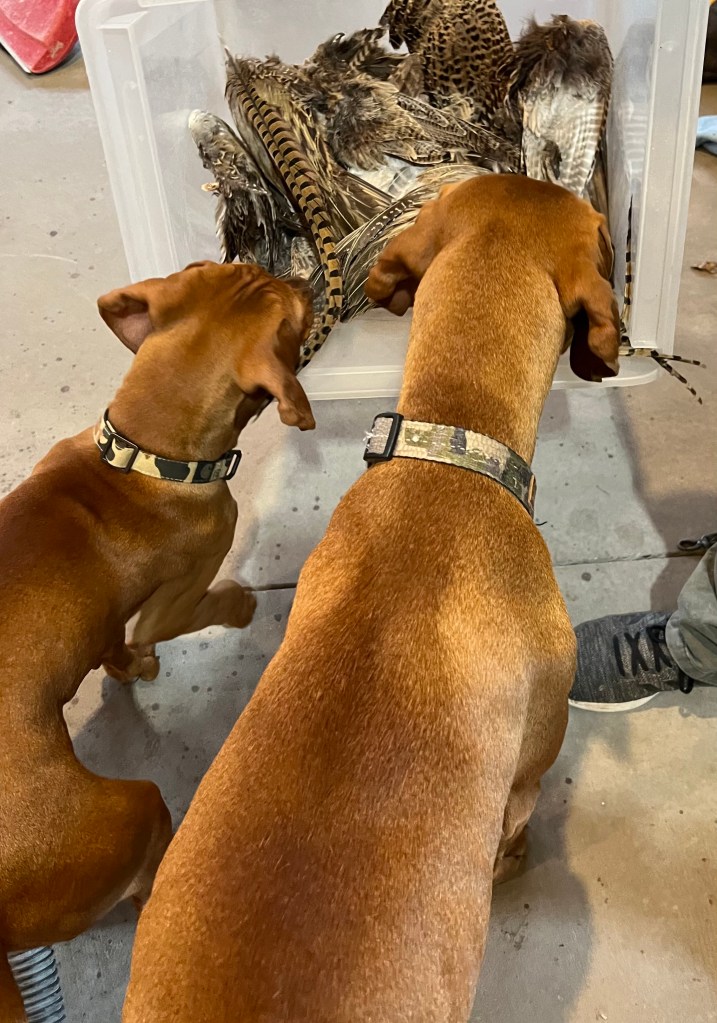
Step 2: Figure out what kind of play/toy excites your dog the most. You will want to take that toy to the place you will be shooting. If you’ve already introduced birds to your puppy and you have a frozen wing, this is the perfect distraction and training aide. Loud noise = birds.
Step 3: Have one person stay with the puppy to play, while the other person walks at least 100 yards away with the gun. When the puppy is playing, shoot the first shot. If the puppy does not show any signs of distress – ears pinned back, tail tucked – continue to step 3. If they do show signs, you will want to be done for the day and try again after working on more noise training.
Step 3: Walk forward 20 yards and shoot. If no distress, repeat until 20 yards away. If distress starts to happen, stop and try again a different day, starting again at 100 yards.
Step 4: At this point your puppy may have noticed you and what you are doing. If they haven’t already ran over, call them and let them smell the gun. The smell of gun-fire is distinct and it’s important to let the dog know where the scent belongs too.
Step 5: After allowing the puppy to smell the gun, the shoot can now engage with the puppy and the toy. After a minute of playing, try shooting the gun in close range. For example, play and then throw the toy. While the puppy is retrieving, shoot the gun. If your puppy has not shown any distress after this last shot, you now have a gun dog.
Just remember, patience is key and you will want to watch your dog closely for any sign of anxiety.
Bonus Tip: Already have a trusted hunting dog? Bring them along for this introduction! A puppy will feed off of the other dog’s energy, and when they do not show any sign of fear towards the gun, it will help ease the puppy’s fear as well.
Phew, made it to the 3 months of having two vizslas under one roof. And not just any vizslas, but one of them happens to be the first Copper dog, Roper. Meet Roper here.
Looking back now, there were a lot of little moments that were actually huge stepping stones into where we are today. So, let’s start with the 3:3:3 rule that became our mantra:
• 3 days of being overwhelmed and anxious
• 3 weeks of settling in
• 3 months of building trust and a bond
Normally, the 3:3:3 rule applies to dogs that are adopted from a shelter and are settling into their new home. However, after doing more reading on the rule, I came the conclusion that it could be a baseline for any dog that is having his home-life and daily routine impacted in a big way. And a puppy was surely a big impact. Read how we went from the bad, to the good, and to the copper trusting in the 3:3:3 method.
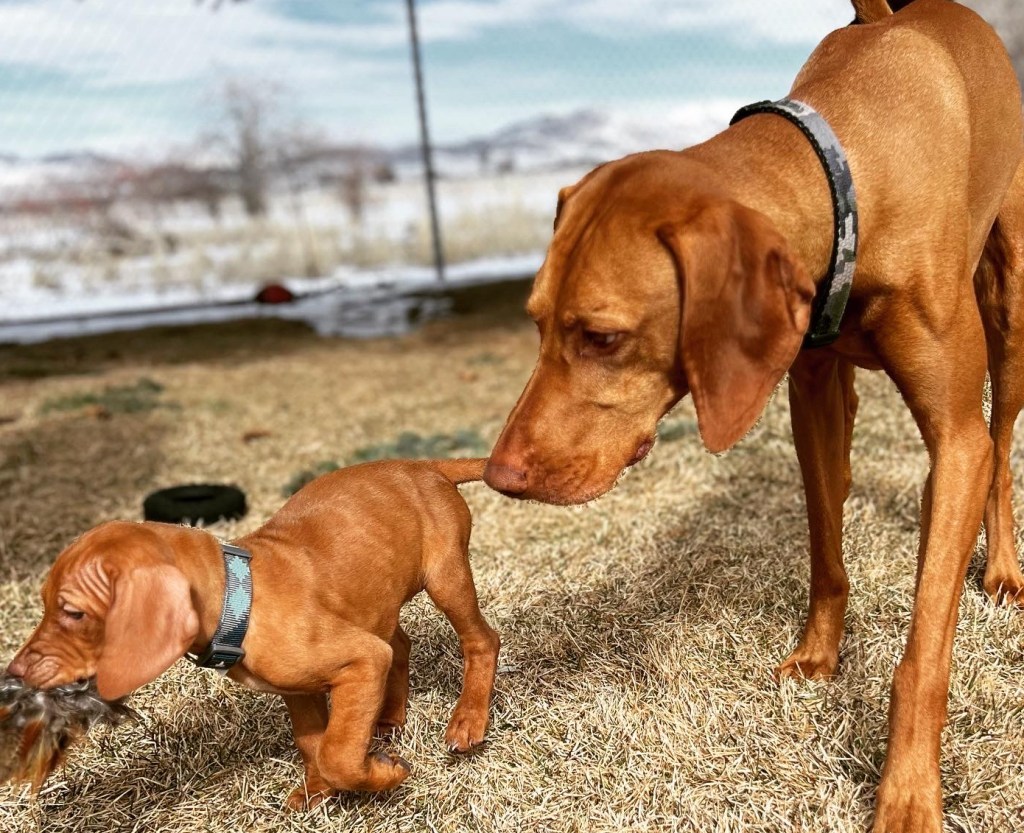
Luckily, we implemented strategies to make the puppy transition easier, and Cinch displayed little to no anxiety coming into a new home. Puppies are so resilient, but far could be said for Roper. Even though the 3 days of anxiety weren’t necessarily from “whose this?” Because we had acquainted them through smell prior to bringing Cinch home, and more of Roper going “she’s not leaving? Why does she like my bones? Why is she on my bed? How come she wakes me up? Why is she in MY spot in MY TRUCK.” and most of these questions were not answered in the most friendliest of ways. Don’t be alarmed, little Cinch girl was never hurt. Roper never attacked or bit, just no nonsense growls and get back snarls. Think of it as good lessons for Cinch to learn body language and tones when a dog is telling her to back off.
However, I’ll be honest. There were a few moments where I thought I didn’t even know my fun loving, harding working, Roper dog. We definitely consulted our vet (which I highly recommend if you ever have a question about behavior, people only associate vets to medical, but they can answer to the entire animal), who assured us that since Roper wasn’t making contact, and felt remorse after his outburst, he’s simply drawing his line with the new pup. And that puppies can be annoying, which made us all laugh.
After Day 1, we knew that we were going to have to help Roper adjust a little easier. After being an only dog for the last two years, and only 3.5, sharing his humans and home was almost unthinkable. Luckily, and I’ll be the first to admit how fortunate we were to be able to do what we did, and that not everyone going through a similar situation could be able to do. We split the dogs up during the day.
Back Story: When we first got Roper, I was a full time 11th & 12th grade English teacher, and so Gage actually took Roper to work with him to his job sites (the family builds custom homes). We felt whole heartedly that was the cause for Roper’s love of the truck and his calmness in them. Literally, put Roper in the truck and he’s content for hours. Like hours. Can’t get him out. Makes it convenient for long trips though, that’s for sure.
We knew we wanted Cinch to be just as comfortable in the vehicle as Roper. What we didn’t anticipate, was needing to take Cinch to work just to give Roper is workday back.
I now work from a home office as an Education Director, and Roper gets the house and yard to himself all day long. Which meant, for the next couple of weeks, Cinch and Roper had a schedule of going to work with Dad. Because you guessed right, after a few days of Cinch going to work, Roper woke up super early, ate breakfast, and demanded it was his turn to go. We threw in days where they would both be home with me (days I had no meetings scheduled). Just to begin the inevitable of having them home together all day long, every day.
3 Weeks: The Good
It really did take every second of the 3 weeks for Roper to settle back into his own home. Because as I said above, Cinch just fit right into the folds of things and never once showed any sign of anxiety or discomfort.
It could have been the camping trip that happened in those first few weeks (that deserves its own story of lessons learned 😅), or the reassurance that his spot in the truck wasn’t taken, he still gets his runs in with dad in the afternoon, and his bed is still his bed, or maybe a little bit of all of it. But slowly, Roper started to make the turn for the good.
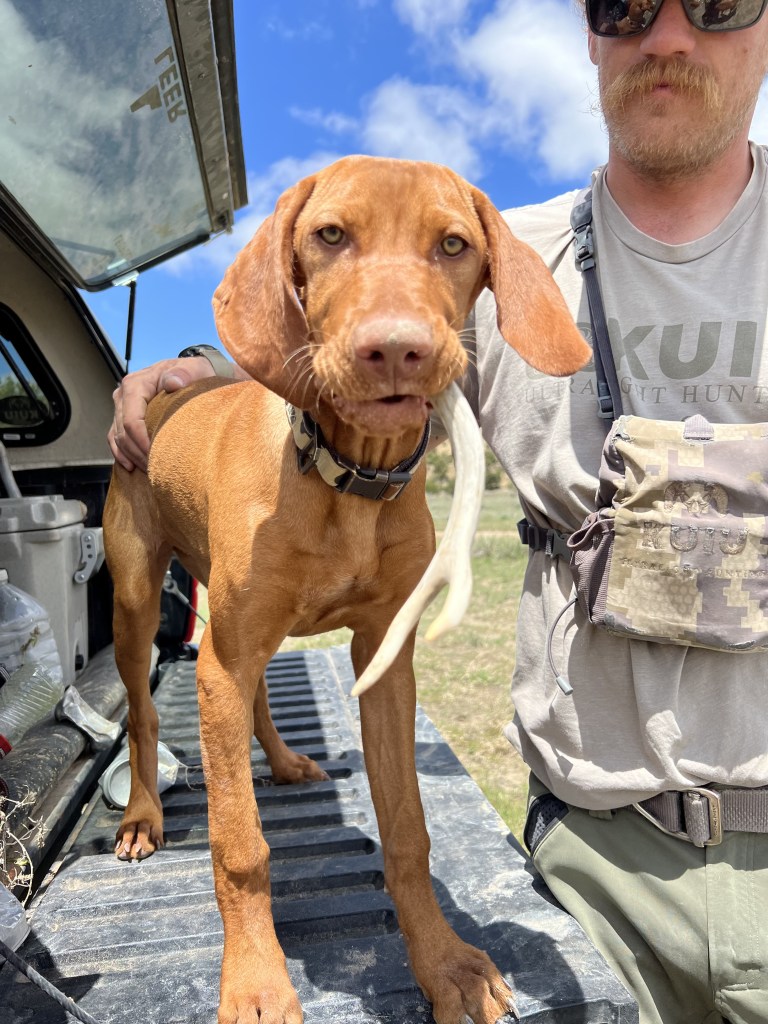
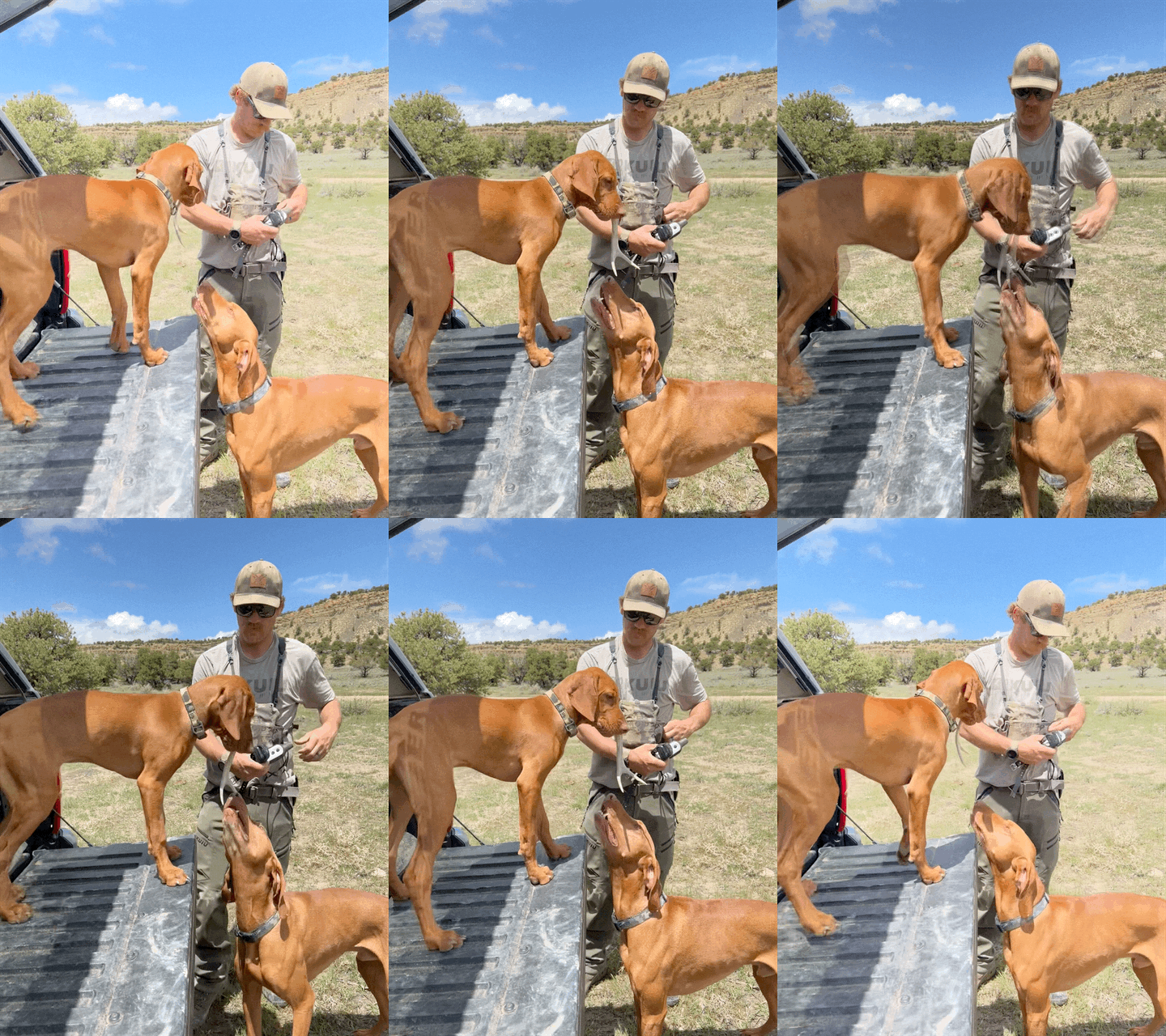
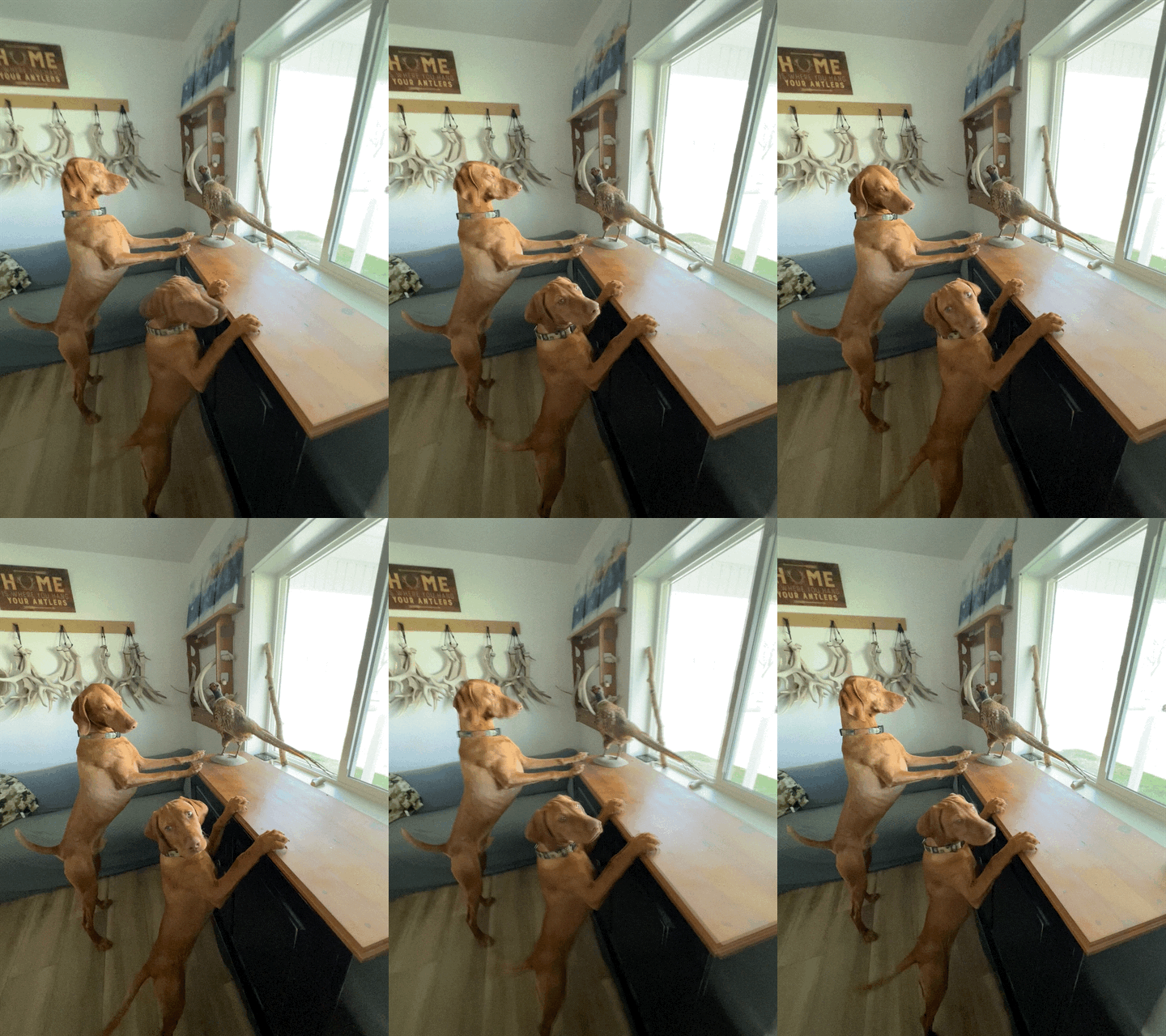
We still needed to give him space and show him that we had his back by not letting her jump on him or bug him while sleeping. And it was during this period that we started introducing Cinch to her job, hunting. This also helped Roper as well, because he started to step in as teacher. I’ll pause, the first time we got the bird wing out, Roper wasn’t sure about letting Cinch have it, then we reminded him there were others. Same with antlers, that was a hard line Roper put down, some Cinch could have, others (like the ones he was personally there to find) she could not.
Although those first few weeks did seem overwhelming to us as owners in the moment, things did settle down and became not so tumultuous.
3 Months: The Copper
And now we are here. Since the 3 week mark and this 3 month mark, we’ve gone from prickly housemates to almost inseparable best friends. Cheers! I won’t kid myself, there is still work to do, and there will always be work to do while while Cinch is a puppy and doesn’t always think things through.
One thing that needs to be considered is Cinch’s size throughout the last 3 months. In the first 3 days, she was tiny and now looking back, we think a lot of Roper’s troubles were just how small she was. It was his first time being with that young of a pup and he had no idea how to interact with her.
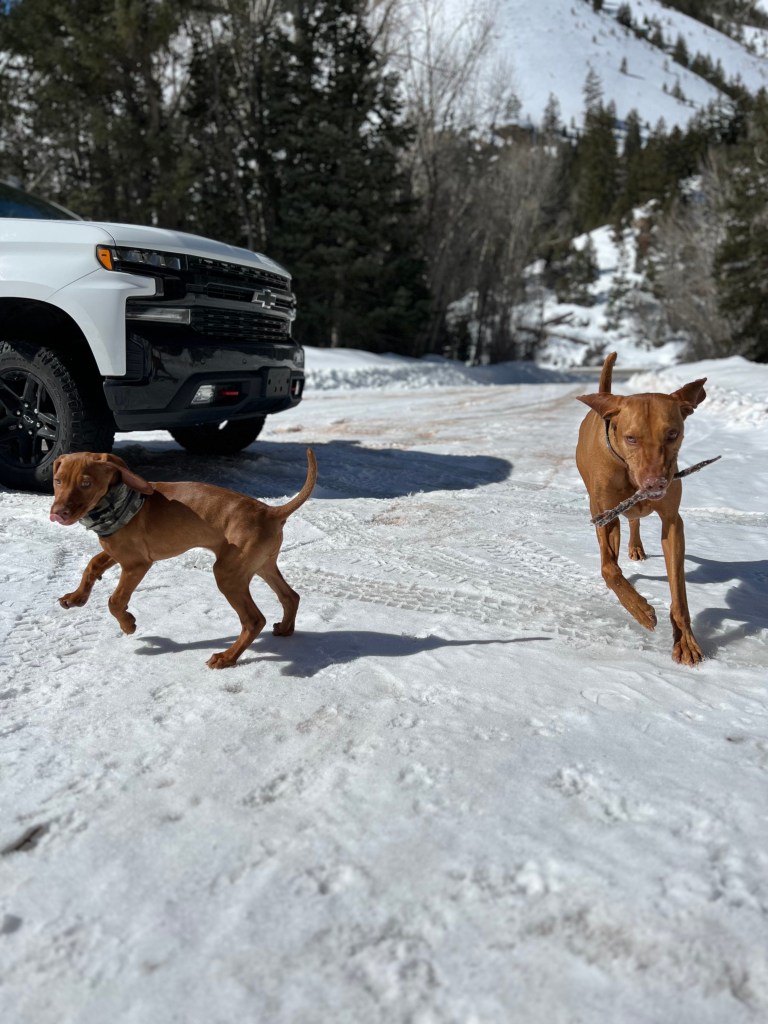
As she’s grown, he has taken her under his wing and taught her how he likes to play, the love of fetch (and sticks 🙄), and a sense of adventure.
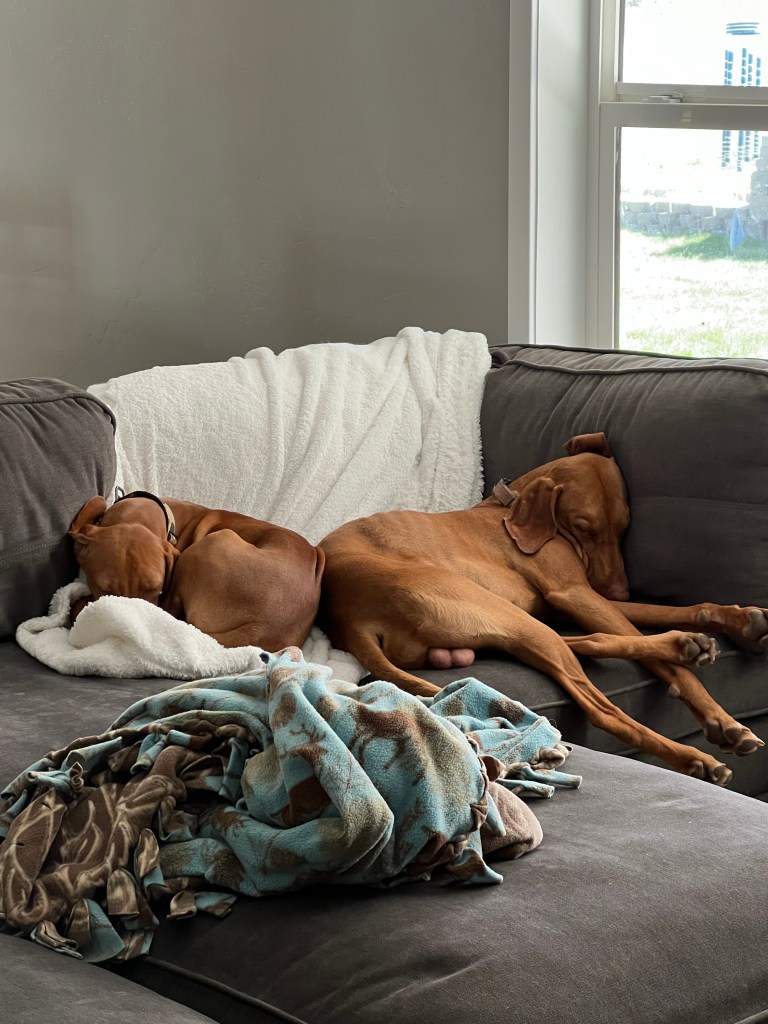
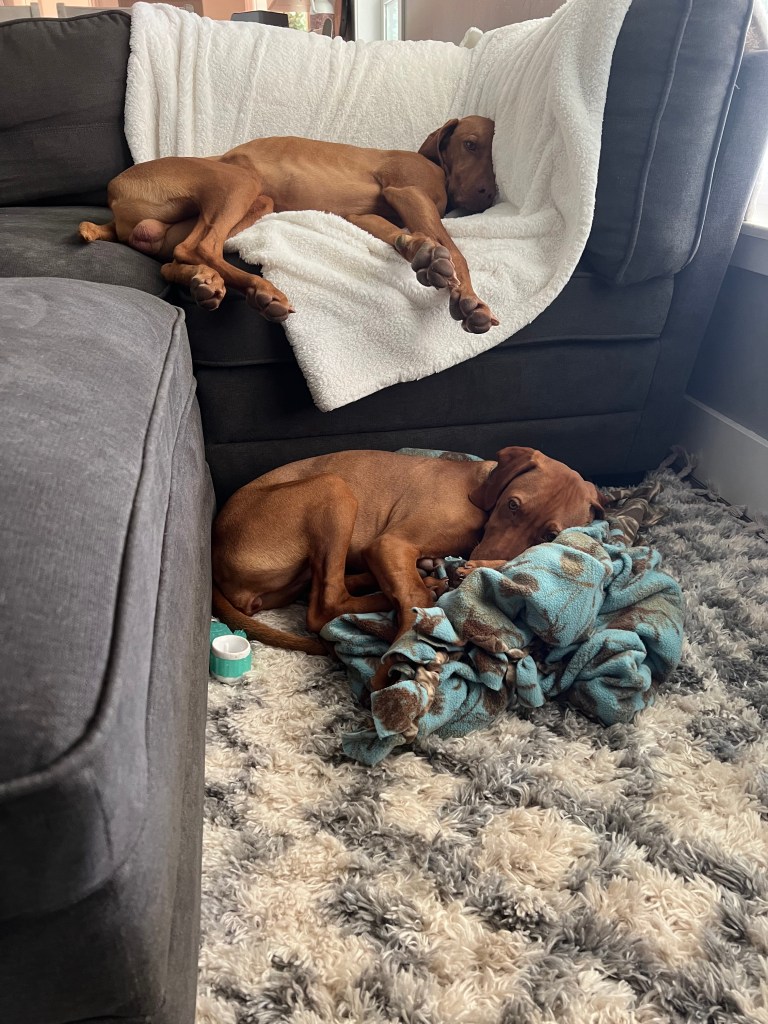
Both dogs are home with me now and have created their own little routine together while I’m working. Which mostly consists of lounging on the couch, out in the sun catching rays, and waiting for 3pm when my meetings are over and dad gets home. From then until bedtime, it’s a blur of copper running from one end of the property to the other
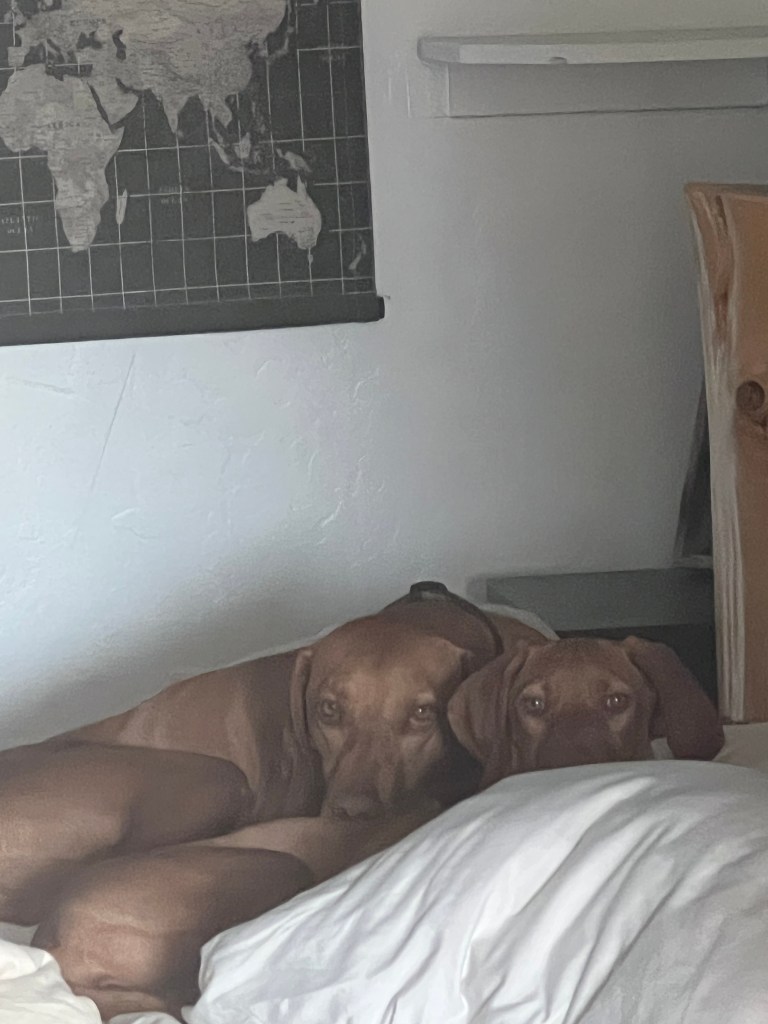
Although their bond isn’t quite finished in the making, it is there and Roper has found a strong sense of protectiveness (not possessiveness) over Cinch. The feelings are returned, Cinch feels great security in the presences of Roper in situations she’s not sure of. He is the first thing she looks at when deciding her next move.
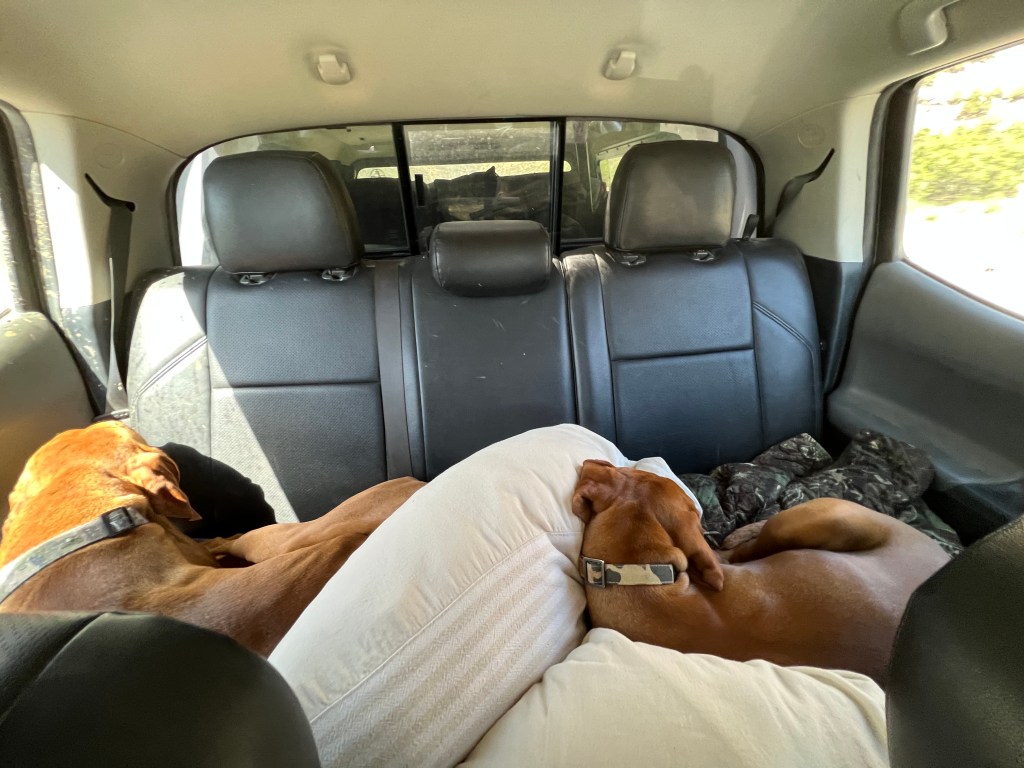
And if you’re wondering about the truck. Roper isn’t too worried about her anymore stealing his spot. With the caveat that in the dads truck (the full size Chevy), she is still kenneled on rides, and in my truck, or as Roper likes to thinks his truck (the Tacoma) because it’s the hunting truck, she gets to ride out of the kennel on dirt roads. That was a HUGE step, because it was really the Tacoma that Roper didn’t want to share. But now look them at the chumps coming home from Memorial Day weekend camping
One thing I can say for is, is if you’re going through a situation where your first dog isn’t too keen on the newest addition, stay patient and trust the 3:3:3 rule. Obviously it won’t work for all dogs, but with most things, time usually works problems out.
Here are my most helpful tips going through 3 days, 3 weeks, and 3 months of going from Cooper Dog to Copper Dogs.
Tips for the 3:3:3 Rule
3 days: provide constant supervision and give the first dog plenty of their own time and affection. Remember, These first few days might be more about comforting your first dog. Especially if you’ve taken the steps to prepare for the new puppy.
3 weeks: stick to your existing routine. Even though puppy training throws a wrench into routines, try not to change your dogs routine. They should still be let out and fed on their normal schedule. Adjust the puppy’s schedule to match as closest to the first dog. Again, puppies are resilient and go with the flow as long as the flow is consistent.
3 months: allow the dogs to build a relationship on their own terms. It may be tempting to initiate play between them, but let them do it naturally, because they will. Dogs are pack animals and are extremely social. Play WILL happen, as long as it’s on their terms. A good rule of thumb is open mouth and lots of moving- playing. Taught mouth and ears back, no longer having fun and need to be separated.
As always, if you’re ever concerned about your dogs, consult your trusted veterinarian. If you don’t have one, or have quick access to one, the AKC provides a wonderful televet program.
I’m excited to watch Roper and Cinch continue to grow together and become a tight knit little hunting team. Now, it’s time to go see what mischief they thought up.
Introducing a new dog, primarily a puppy, into an already structured home with daily routines already in place might not be the happy walk in the park like movies make it out to be. Especially if you already have a dog in the home that is set in their ways, and maybe not all that fond of being bugged. So when the time came to make the decision of growing our four-legged family, it was not taken lightly, and we did our best to set up both dogs (and us) for success.
Before bringing the new puppy home, we knew we had to prepare ourselves, our home, and our Roper boy (the first copper dog) the best we could, as to not completely flip life as we knew around. To help ease all of us, but mostly Roper, we took the following steps to help prepare for the new puppy;
Puppy Visits! Before it was time to take our new puppy home, we worked with the breeder to visit frequently. I highly recommend getting as much interaction with your new pup prior to bringing them home, especially if you have other animals in the home. This will help the puppy transition quicker if they already feel like they know you. Bonus if you are able to let dog #1 ride along in the vehicle to get the fresh smells from you & potentially meet the new little one in a neutral environment.
Get all of the scents. Not only can it be overwhelming for your current doggo, going to a new home can be scary for a new puppy. Before the first visit, pick out a blanket or towel that can become the new dog’s. Let your first dog lay in it, or rub them down with the blanket or towel. You will then want to take this on your puppy visits, let them smell it and also wrap them up in it. After the each visit, let your older dog have it back to soak up the puppy smells. By allowing both dogs get familiar with each other’s scent beforehand, they will already feel acquainted.
Go shopping! Okay, okay, this one sounds like a gimme, but is so important! Go shopping for all the puppy needs PRIOR to bringing them home. You will have your hands full as it is, and it won’t be fun for anyone scrambling last second to get all of the essentials. However, unlike any google search that will give you a crazy long list, just make sure you have the following for a seamless first few days:
Puppy Food & Training Treats (Don’t be scared to ask the breeder what puppy food they started the litter on).
Food & Water bowl
Collar & Lead
Teething Toys (fun fact: They make actual teething toys for dogs now)
Appropriate sized crate – Regardless if you want to continue to crate train, having a small crate will make car rides safer and a place for the puppy to rest when you need some personal time. You know, for things like showering.
Optional: Puppy Pads. If you do not have a yard to immediately start potty training in, puppy pads make a great alternative!
Puppy Space & Proofing. Before bringing the new little rascal home, puppy proof your home! Yes, it is a thing. And yes, it should be done. Now, it doesn’t have to be extensive, but anything you cherish and don’t want to find in your puppy’s mouth, pick it up. Along with proofing the home, you should also make sure there is a designated space for food, water, and where their crate or bed will be. Once dogs are older, feel free to move those things wherever, but when they are young, consistency is key.
Select a Vet: If this isn’t your first dog, odds are you already have a loved and trusted vet. If you don’t, find one and schedule your first appointment prior to bringing the puppy home. Many vets now days are booked out at weeks at a time, and missing a crucial shot appointment can put your new puppy at risk of all sorts of deadly illnesses. Don’t forget to also get any records of appointments from your breeder, like first round of shots, if they were dewclaws were removed, and if applicable, their tail docking recording.
The most important tip however is to be prepared to be flexible. If this is a second dog, or even a third dog, remember that all dogs learn differently and at different speeds.


 The Copper Dogs