Spaying can be a traumatic experience for both owner and dog, from having to drop off your beloved girl at the vets office in the morning, to the two-week after care from surgery. Not only can it be on the traumatic side, it can cause stress in the household, especially if there is another dog AND your dog is an active breed. We fit both of those bills. Which is why I wanted to document each step of the way, to hopefully help out the next person who has to go through this experience.
What to Expect Leading up to Surgery:
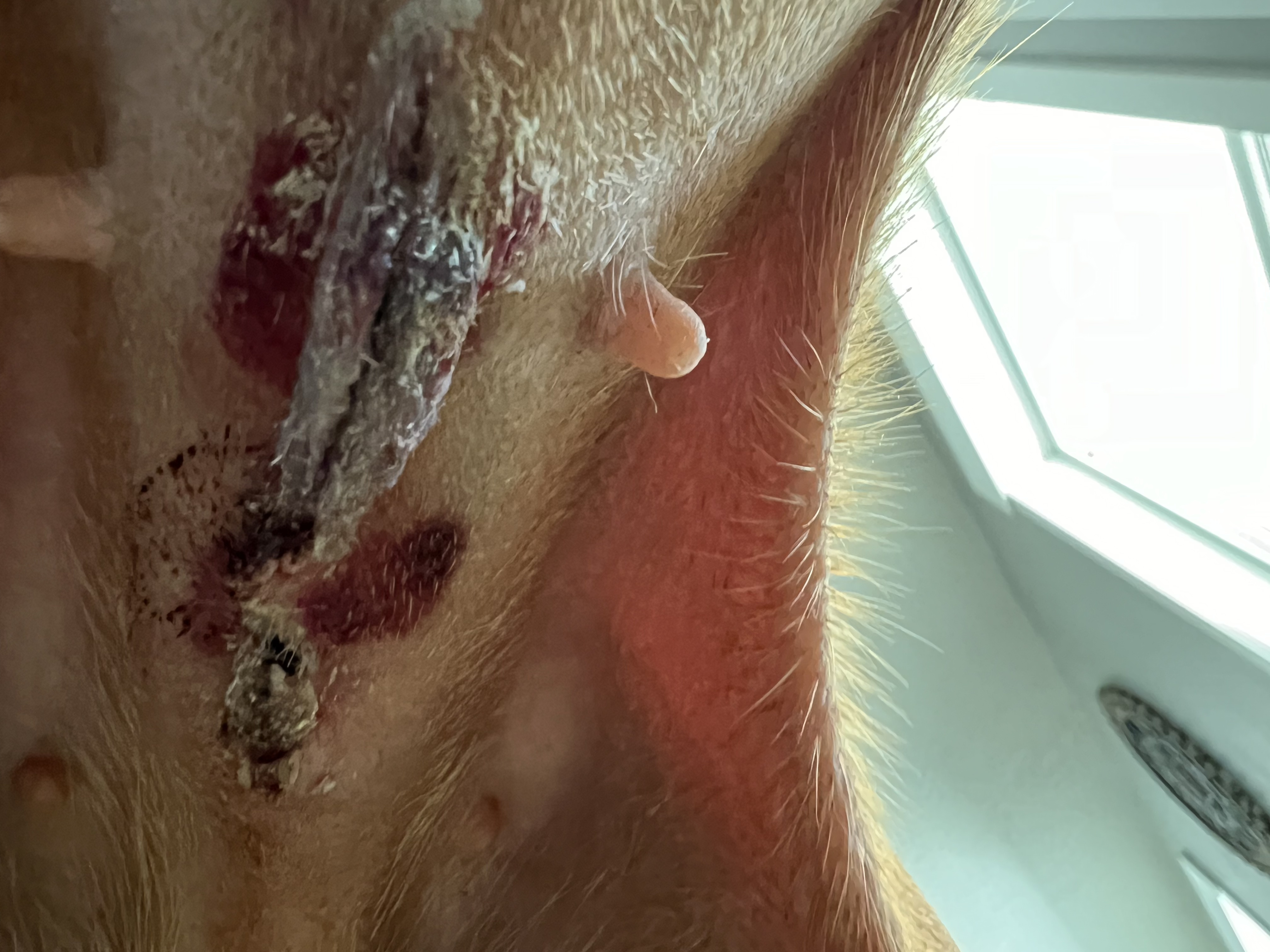
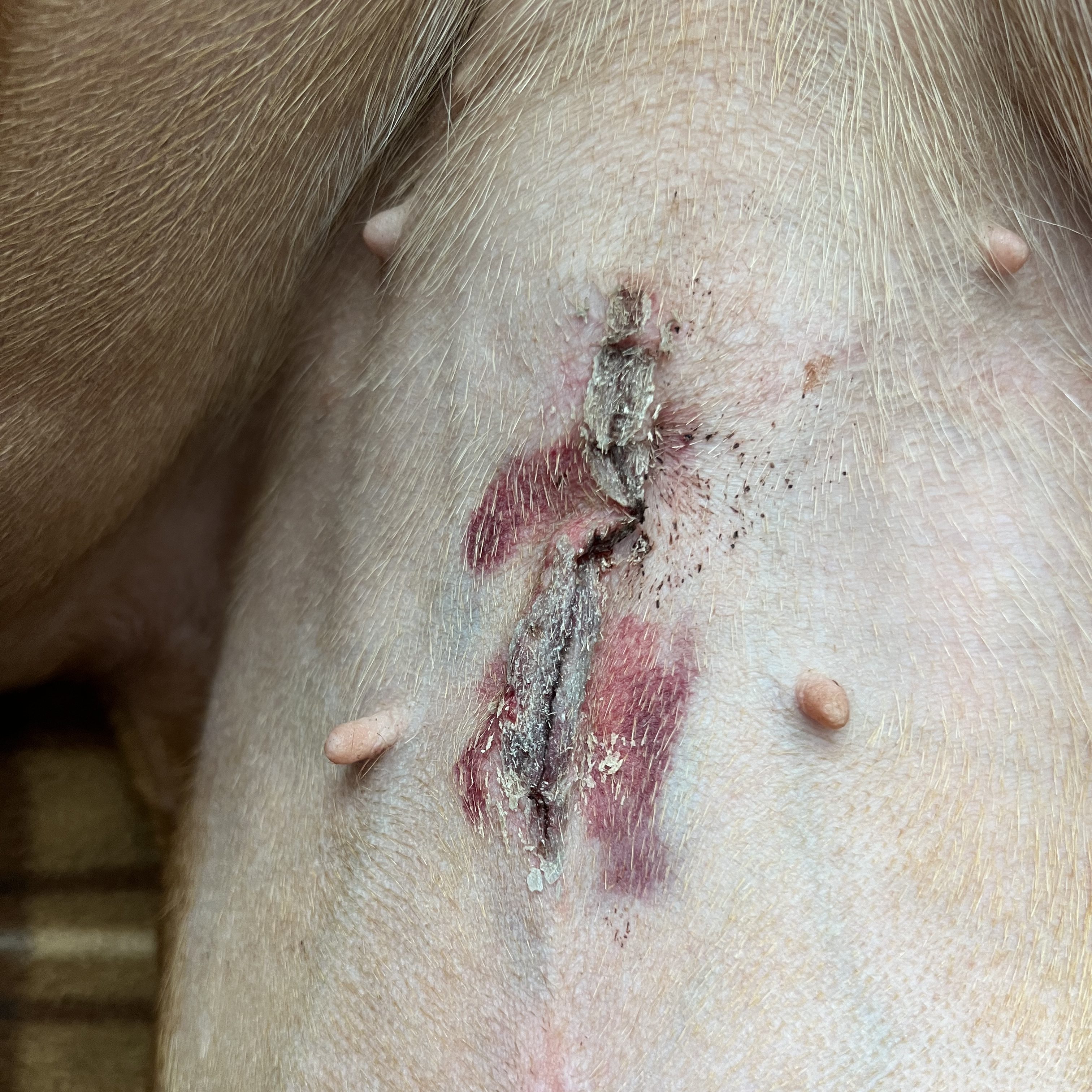
Warning – The rest of the blog will contain pictures of the incision site to show the progress of Cinch’s healing journey.
Leading up to the day of surgery, your vet will ask you to not allow your dog to eat or drink after a certain time period – depending on the drop of time. This is extremely important to follow, since having anything in the stomach can increase the risk of sickness.
The Day Of Surgery:
The day the dog gets spayed will be one of the hardest and easiest days out of the entire healing process. Hard because you have to drop off your four-legged pal off super early in the morning at the vets office, and will not pick them up until later in the afternoon, when they are still fighting the effects of the drugs. Easy because they will be totally out of it when they get home and you won’t have to worry about them running or jumping.
Why does my dog have to be at the vet all day? Typically, surgery will happen in the morning and this will give the vet and techs a chance to monitor the dog for several hours before going home. They will be looking for signs of complications, sickness, and verifying they come out of anesthesia. This schedule will vary with your vet, so make sure to talk them about the expectations and what will happen.
If you have a larger dog, be prepared that you may have to carry them at pick up, and again once they get home. Sometimes due to the anesthesia, they don’t quite have control of their legs. Since they will be down for the count when you get home, make sure to already have a spot ready for them that will be comfortable and nearby you or their co-owner. The day would have been scary for them and the disorientation of the drugs will make them even more needy than usual.
You will also want to be prepared for the cone of shame – however full transparency, we didn’t have Cinch wear her cone for too long because of the amount of stress it caused her. We simply made sure she was monitored at all times to ensure she didn’t get after her new incision.
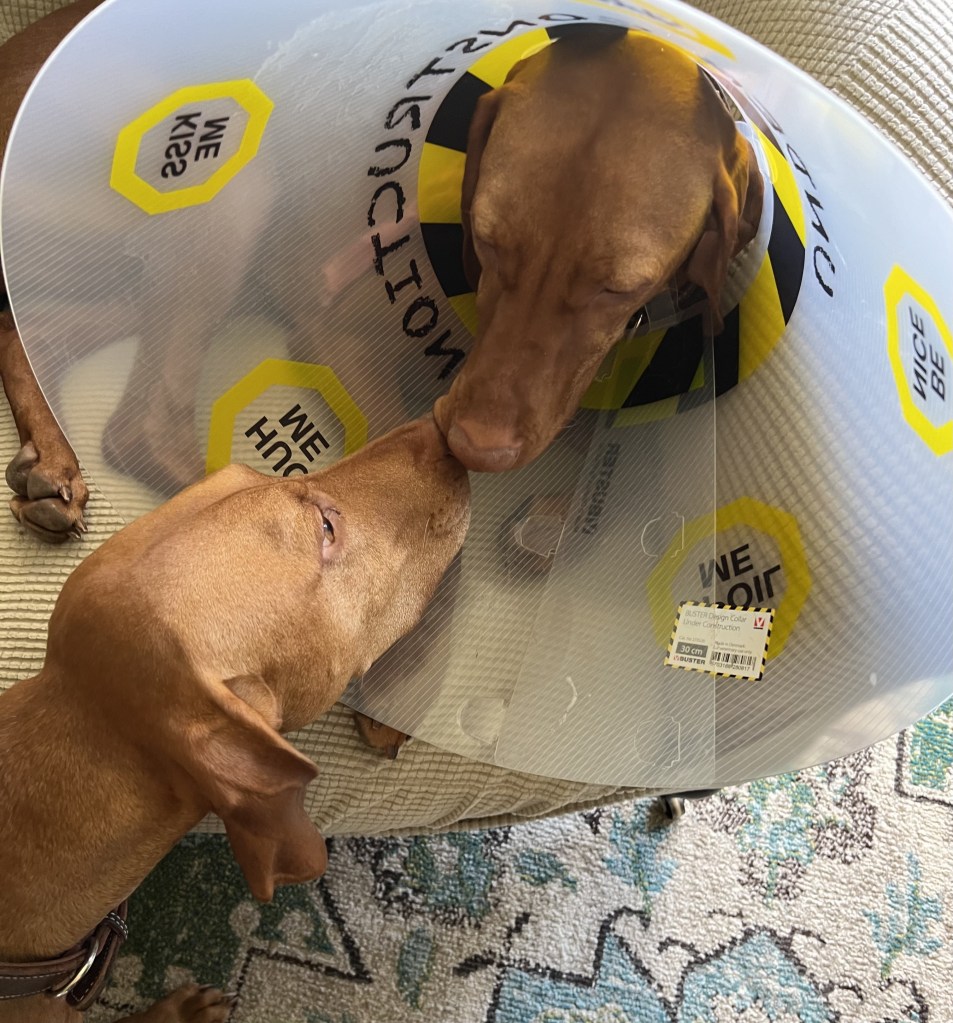
Side-Note: To bypass the cone at night since she likes to sleep with Roper on their dog bed (under a blanket) we opted for a body suit designed for dogs after surgery. The one we used was Suitical Recovery Suit for Dogs, available on Amazon. We don’t have any affiliation with the recovery suit, just were super pleased with the comfort it gave Cinch.
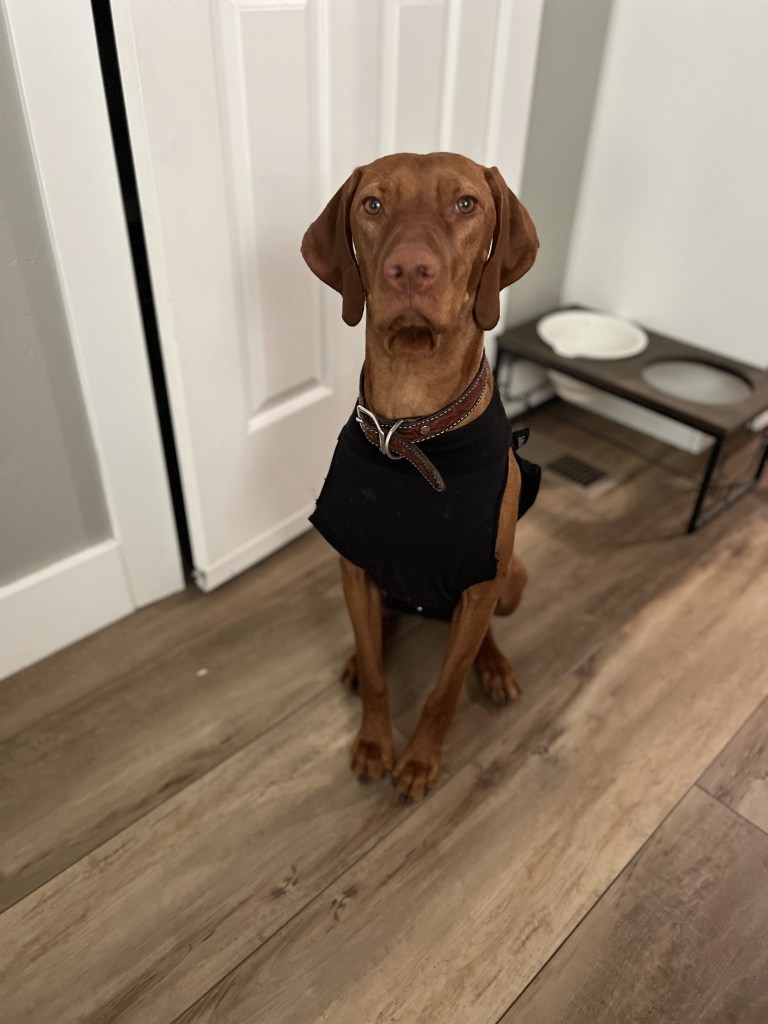
Your Vet will have also sent home pain medication and a course of antibiotics. These generally start the day after surgery. If your dog isn’t great at taking pills (like Cinch), be prepared to crush them up OR hide them in a snack. We had to crush them up and put them in some of their boiled venison, since if the pill was whole, she would spit it out.
Recovery Days 1-2:
The first and second day of recovery will be pretty low key since anesthesia effects and pain will keep them mellow. At this time, the incision site will still be inflamed and may even having some bruising. Watch for any additional redness, swelling, and if it’s hot to the touch. Due to the glue on the outside of the site, it will be crusty and will continue to be so until the glue comes off. Remember that the stitched are internal and the glue is external.

Days 3 & 4:
Once we hit the third day of recovery, Cinch was starting to get some of her energy back. This made things a little bit more difficult to manage, as she was not allowed to jump or run – two things she loves. This was especially difficult when her “dad” got home. To help with her excitement, he would let me know when he was about to pull in so I could hold her and prevent her from jumping up and down. IF you are at this point in your pups healing journey and are starting to feel like it’s going to be a long two weeks, don’t worry – you got this!
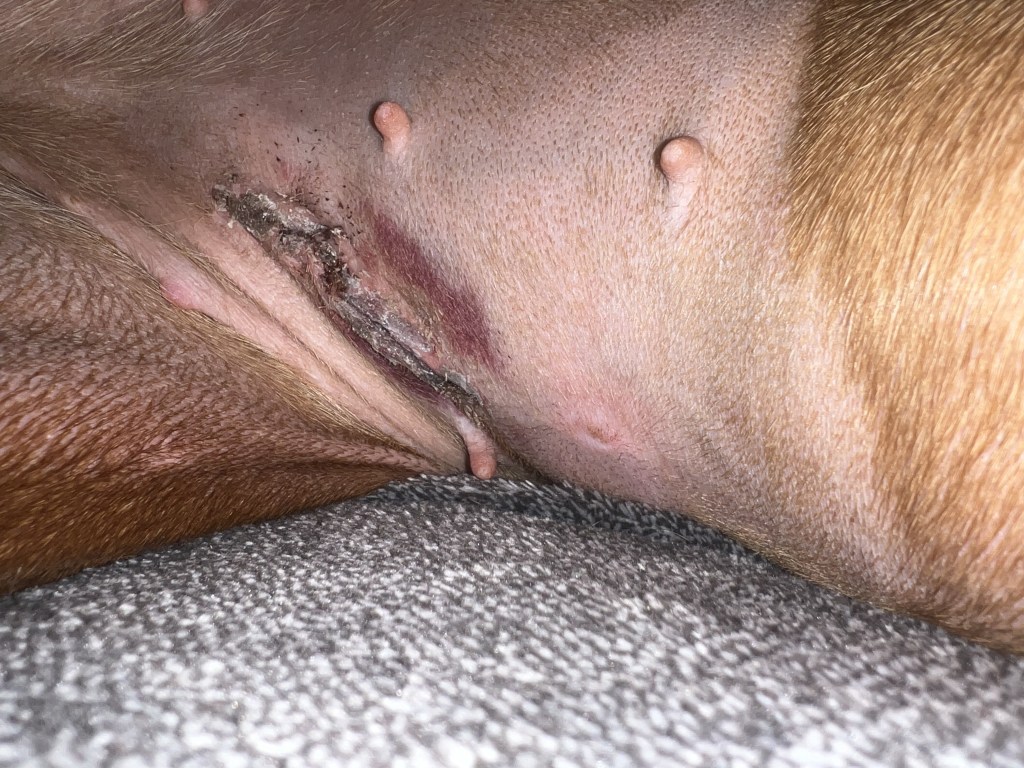
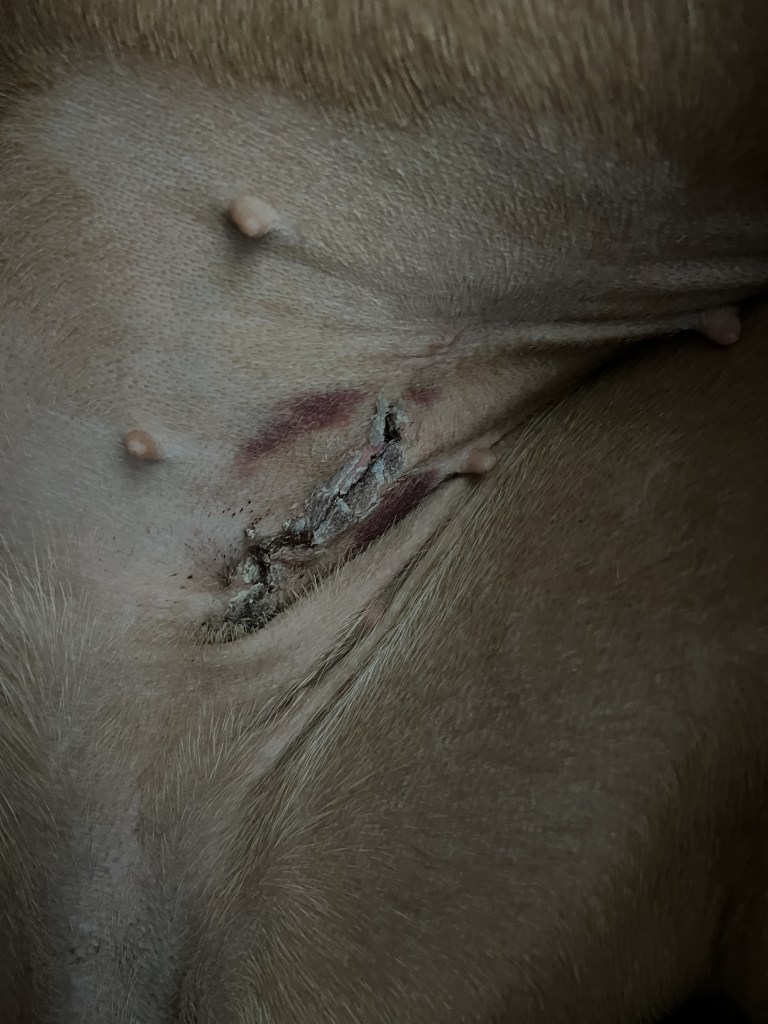
The incision site will still be crusty from the glue & will have bruising. Again, look out for any puss or additional swelling. At this time as activity levels rise, start to look for any openings of the incision that could indicate stitching has opened up.
Day 5 & 6:
You will definitely start feeling the stress of keeping activity levels down by day 5. We also stopped all pain medication by Day 5 as well, as she didn’t seem to need it anymore. Day 6 was a scary day for me, because it was the day the glue came off. I thought for sure Cinch had somehow gotten after her incision site. So, after a frantic call to Gage and then the Vet’s office, I was able to send in a picture to her Vet who kindly informed me that all was well. SO, if one day it’s a crusty wound and the next the glue is gone, don’t panic. It’s all part of the process. Our vet did advise us to apply Neosporin to the wound site at this time. We did this with a Q-tip as to not let our hands (which potentially could have germs) touch the site.
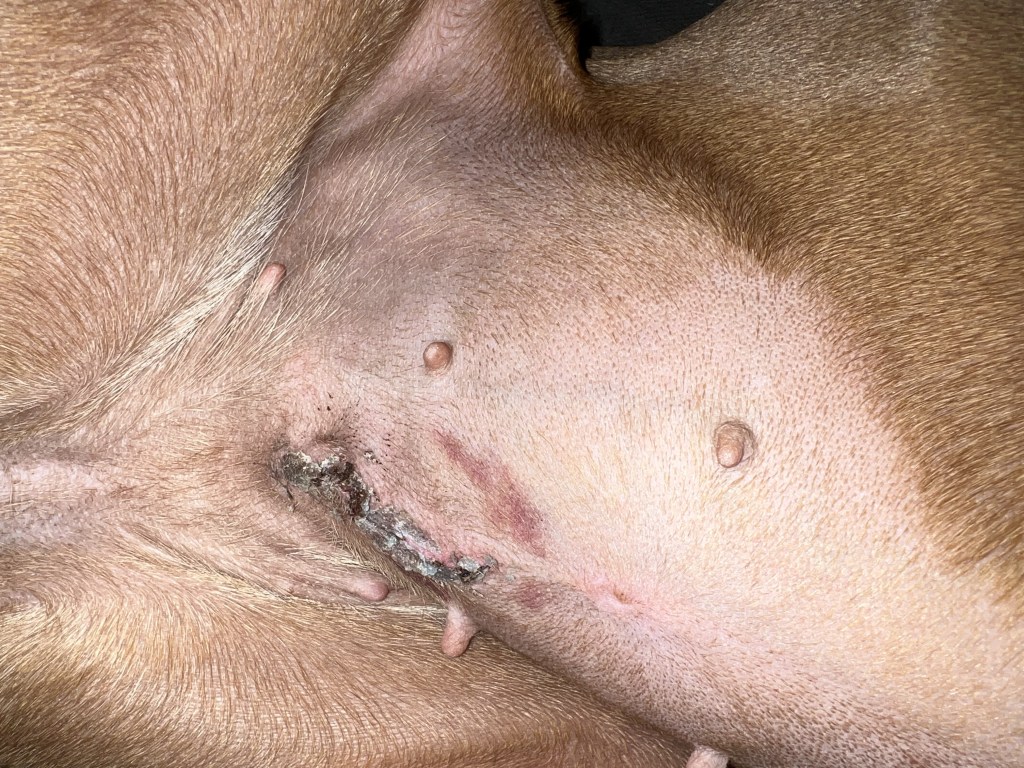
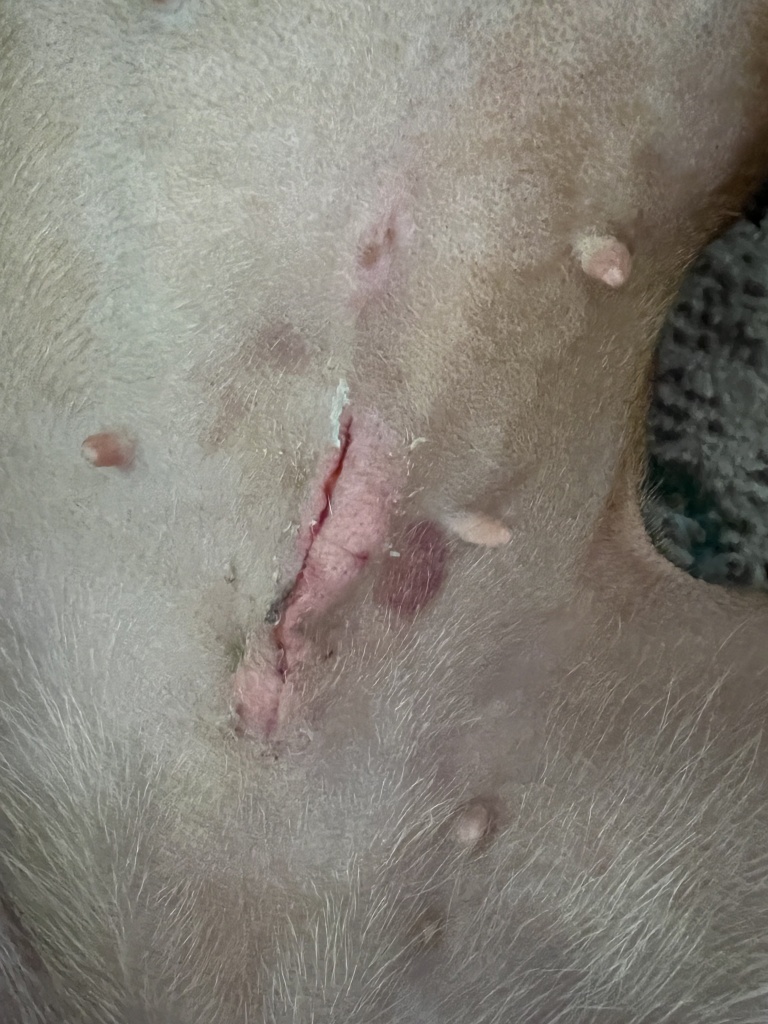
Day 7 & 8:
Once you hit the one-week point, the healing process really speeds up. It was during these days we saw the most improvement with the initial inflammation and bruising. Just be warned, all energy levels will be back to normal and there will be minimal pain in movement. Be sure to still limit how much running and jumping is being done.
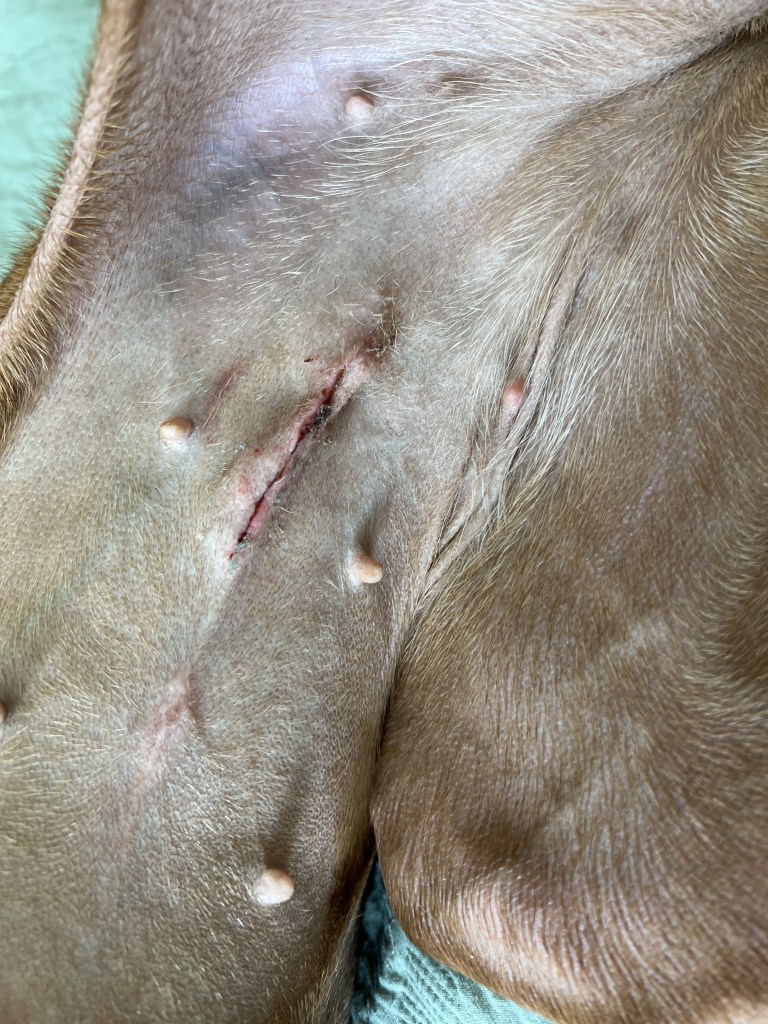
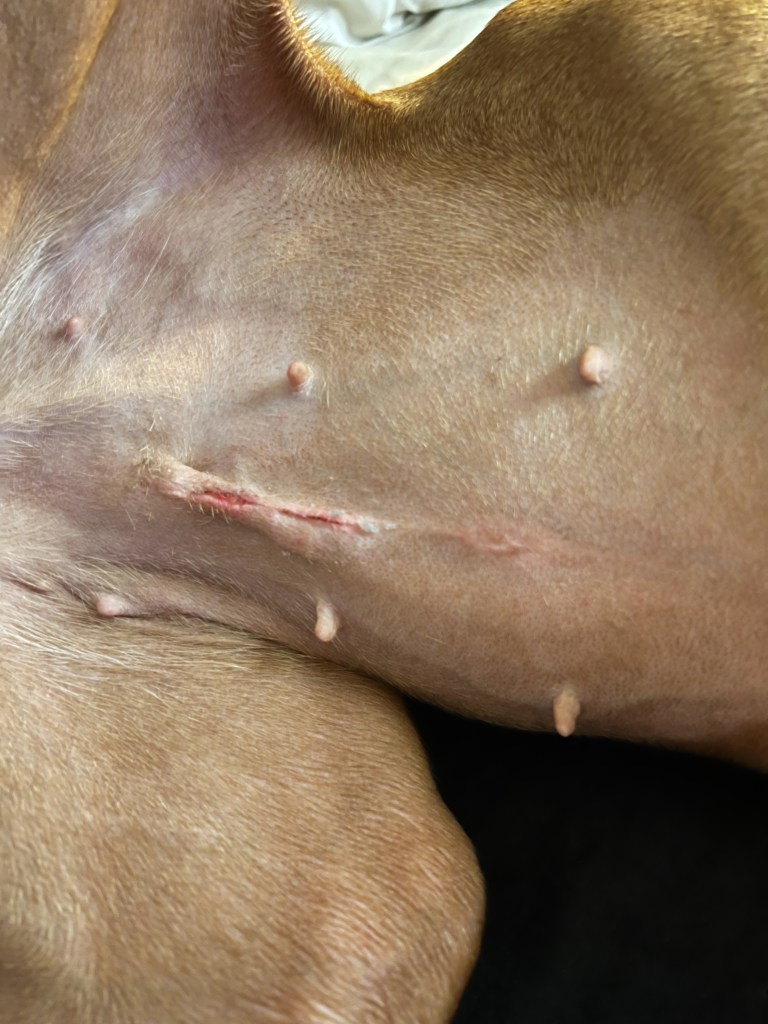
Day 9 & 10:
All I can say is, you’re almost there! At least that’s what I keep reminding myself every time Cinch tried to jump or play with Roper.
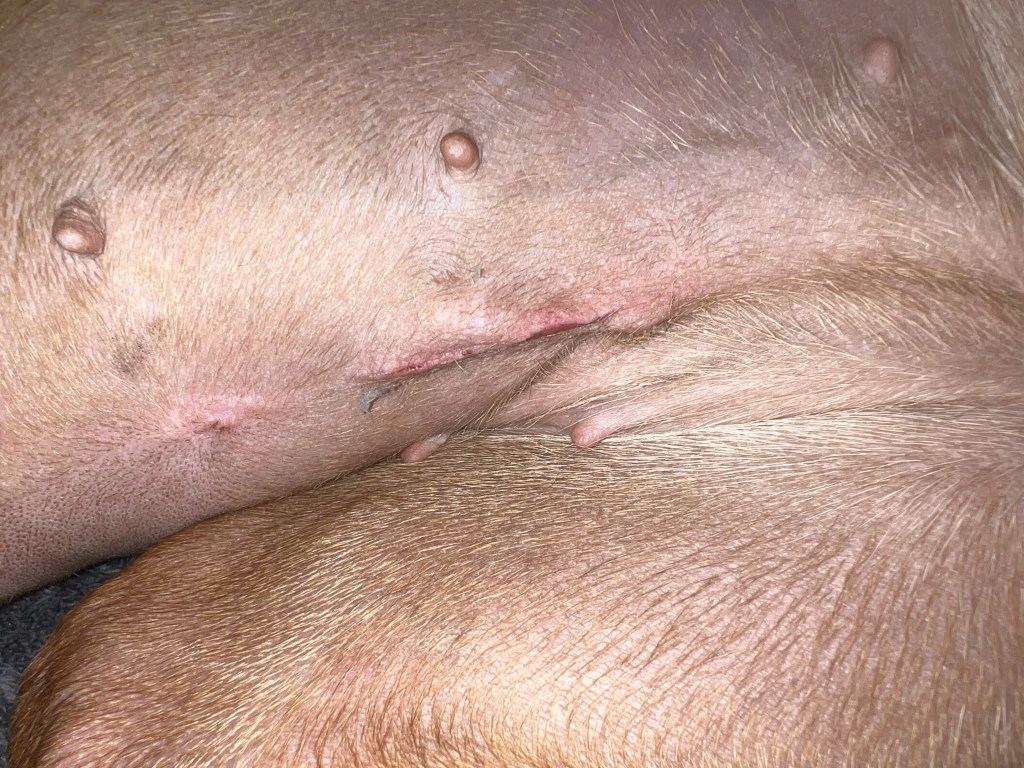
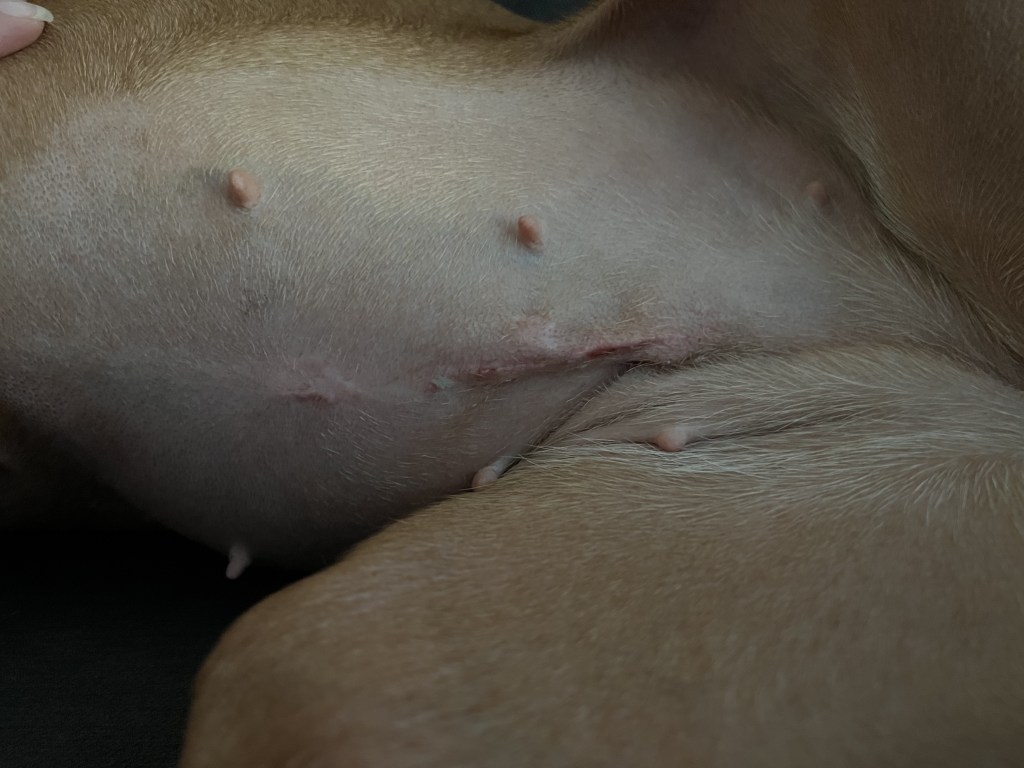
Day 11 & 12:
The 12 day recovery period has been completed! We went ahead and made it an even two weeks, but definitely talk to your vet. As you can see in the picture below, she was completely healed by the 12th day.
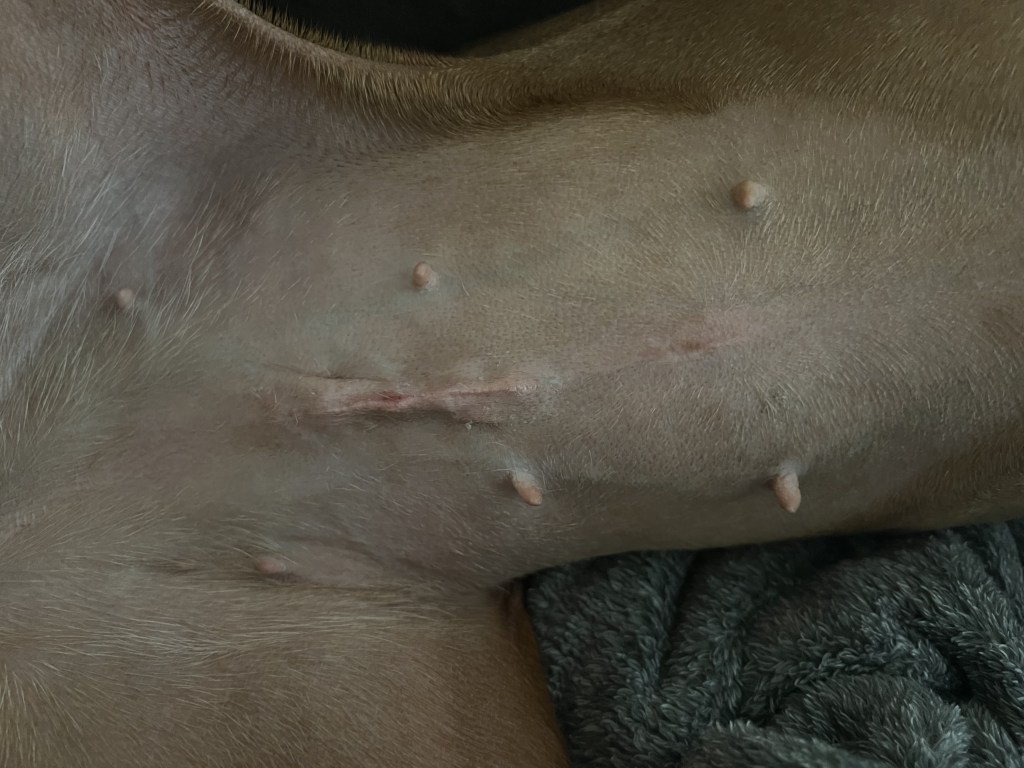
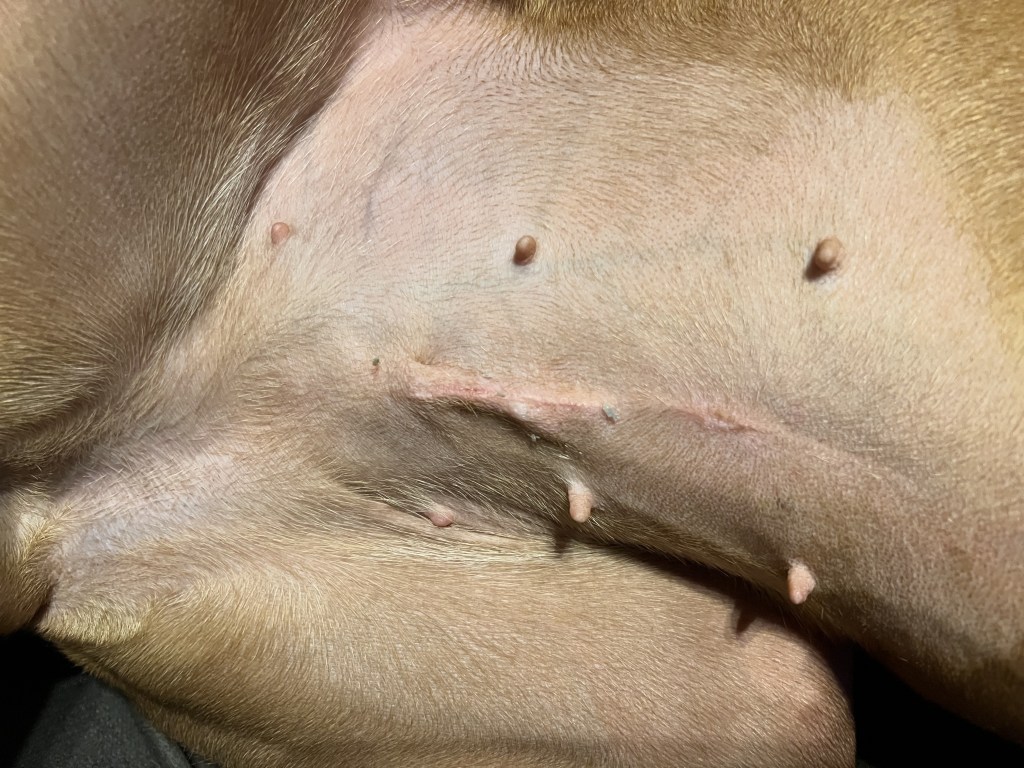
If you are going through the spay recovery, or you are about to, just remember that this is temporary and you will get through it. Find what works best for you and your family, whether it’s the cone, a surgery suit, or something different. All dogs react differently as well, just know that you know them best and when in doubt, call the vet! They understand that this is a scary time for you as well, especially if this is your first spay.
If you have any tips or tricks on what worked for you, I would love to hear about them!
I’m off to throw a stick for Cinch now that she’s back to 100%.
 The Copper Dogs